The significance of Oleksandr Usyk’s Wembley farewell
Oleksandr Usyk faces a decisive career moment with his December 2026 Wembley farewell. This transition occurs amid Daniel Dubois's IBF mandatory rematch purse bid and ongoing discussions regarding WBC bridgerweight division fragmentation.

Usyk’s path to the top
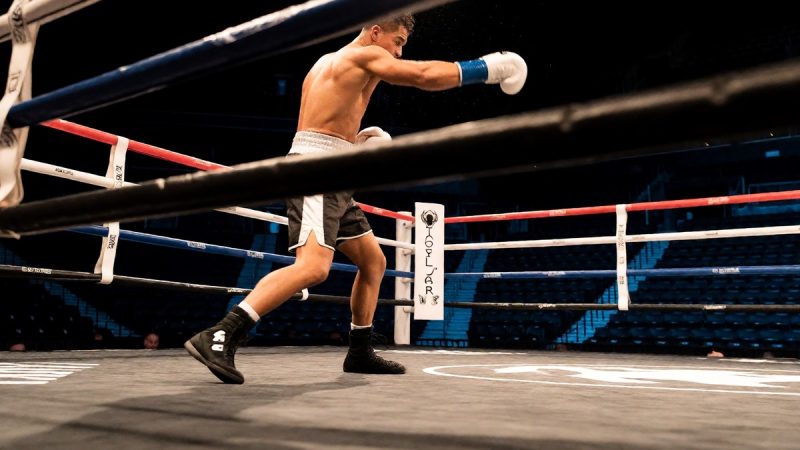
Usyk’s career reaches a decisive point in December 2026. I view his upcoming Wembley farewell as the culmination of a journey that began on 4 October 2014 when he beat Daniel Bruwer via seventh-round TKO to win the interim WBO Inter-Continental cruiserweight title. He defended that title two months later against Danie Venter, where he stopped the 35 year old opponent in the ninth round while he remained ahead on all three judges’ scorecards at the time of the stoppage. Usyk also defeated Johnny Muller in 2015 via third-round TKO at the Sport Palace in Kyiv, where he knocked the opponent down twice. His ninth straight knockout occurred on 12 December 2015 against Pedro Rodriguez. In 2016, Usyk defeated Krzysztof Glowacki at the Ergo Arena in Gdansk to win the WBO cruiserweight title. Glowacki weighed 199.3 pounds, while Usyk came in at 198.75 pounds. He dominated that fight with footwork and hand speed, causing a cut on Glowacki’s eye that bled for the remainder of the contest. He later defeated Thabiso Mchunu in 2016 with three knockdowns, scoring the final knockdown in the ninth round. The fight with Mchunu started out slow, causing the fans in attendance to boo with displeasure. In 2017, he beat Michael Hunter in Maryland, winning a unanimous decision after using his left hand to control the body. Usyk weighed 199.4 pounds against Hunter, who came in at 199 pounds. Pundits thought Hunter was gifted going the distance and the fight should have been stopped by referee Bill Clancy in the championship rounds. He then won the Super Series in 2017 by defeating Marco Huck in Berlin and finished the tournament in July 2018 by defeating Murat Gassiev in Moscow.
The fragmentation of the WBC
The boxing world discusses WBC fragmentation, which I find echoes the medical reality of white blood cell counts. Just as boxing titles split, a WBC count breaks down into a differential of five types. The total WBC count measures infection-fighting cells in the blood. I find the medical "fragmentation" of these cells into five distinct types quite telling.
| Cell Type | Normal Percentage |
|---|---|
| Neutrophils | 40% to 60% |
| Lymphocytes | 20% to 45% |
| Monocytes | 5% |
| Eosinophils | 5% |
| Basophils | 1% to 2% |
The medical count shows that neutrophils act as first responders to bacterial infections. Lymphocytes drive the targeted immune response, with B lymphocytes producing antibodies and T lymphocytes coordinating the broader system. I note that eosinophils fight parasites, while basophils release histamine and heparin. This medical division of labor mirrors how different weight classes attempt to organize combat. However, the medical definition of leukocytosis remains a simple increase in cell numbers, unlike the messy politics of boxing divisions. I find the idea of a "bridgerweight" division just as confusing as a high lymphocyte count caused by viral infections. A high WBC count exceeds 11,000 cells per microliter, and a count above 30,000 often causes concern for leukemia. Medical professionals note that a low white blood cell count can signal infections or autoimmune disorders.
Legacy and the Dubois rematch
The rematch bid by Daniel Dubois adds pressure to this transition. Usyk’s legacy relies on his ability to dominate different weight classes, much like how the human body manages various white blood cell types. He controlled the fight with his jab against Muller and used his combinations to break down Mchunu. He even overcame an elbow injury in 2018 to win the Muhammad Ali trophy. You probably remember how he outboxed Gassiev with a commandeering jab. I find his dominance in the cruiserweight division hard to dispute. He beat Mchunu after scoring a knockdown in the sixth round and two more in the ninth. He also defeated Michael Hunter, where the referee gave Hunter a standing eight count in the twelfth round. Usyk landed 321 of his 905 punches in that fight, which equals a 36% connection rate. He also beat Glowacki with a 119 – 109, 117 – 111, and 117 – 111 score by using superior hand speed and a spearing jab. He landed 163 of 517 punches against Mchunu, which was 32% of his total. Does his upcoming performance at Wembley match the dominance he showed in the Super Series?