Misreading Zverev in Paris
Alexander Zverev faces physical and mental exhaustion heading into the Paris Masters following a heavy schedule including the Shanghai Masters. His recent loss to Alejandro Davidovich Fokina highlights how fatigue impacts his service returns and overall consistency.
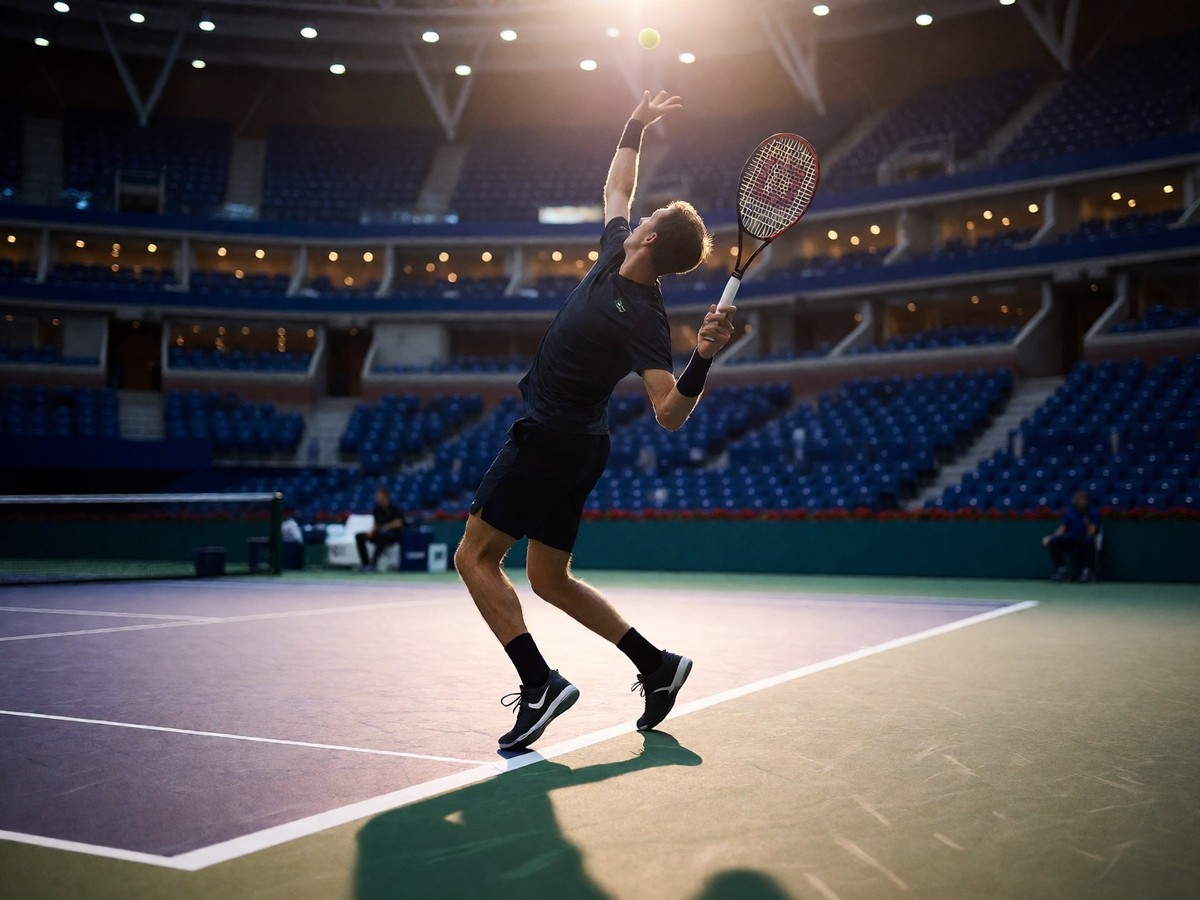
Zverev enters the Rolex Paris Masters with a 6-2 record this year, yet his recent performance suggests a player struggling with physical and mental exhaustion. He lost his Shanghai Masters semi-final to Alejandro Davidovich Fokina with a 5-7, 6-4, 6-3 scoreline, citing fatigue and injury after racing from the US Open to the Laver Cup, Beijing, and Shanghai. I find his excuse about his eyes tiring during returns to be a weak explanation for a world number three who recently won the French Open. He admitted he felt flat after his match against Bublik, where he won in a third-set tie-break, and specifically noted that returning wide forehands became difficult when he lacked energy.
The German’s scheduling remains a major problem for his consistency. He previously told the ATP that an 11-month season provides insufficient time to rest or physically prepare the body outside the court. While he defended the two-week Masters 1000 format for players ranked between 50 and 100, he clearly argued it lacks benefits for top-10 players. His 2026 season began at the United Cup, where he lost to Hubert Hurkacz, and he lacked match play after pulling out of the Kooyong Tennis Classic. You should not expect him to find his best rhythm in Paris if he continues to ignore the physical toll of his heavy schedule.
The Basel fatigue trap
Analysts often misinterpret Zverev’s form by ignoring the direct impact of recent high-stakes fatigue. In 2019, Roger Federer withdrew from the Paris Masters after winning his 10th Basel title to prioritize being fresh for London, a sentiment Zverev shares regarding the grueling end of the season. Zverev’s recent loss in Shanghai showed how fatigue specifically affects his service return effectiveness. He struggled to return wide forehands to the deuce court against Fokina, despite his high physical output during the tournament.
The pattern of his season shows a massive physical investment that leaves him vulnerable during the indoor hard-court swing. He won the 2026 French Open against Flavio Cobolli with a 6-1, 4-6, 6-4, 6-7(5), 6-1 score, a match where he showed signs of leg trouble at the end of the fourth set. He also dealt with a serious ankle injury that forced a retirement against Rafael Nadal in a French Open semifinal. Comparing his clay success to his current hard-court fatigue leads to wrong conclusions about his true level.
Turin tiebreaker rules
The Nitto ATP Finals in Turin introduce specific tiebreaker enforcement that players must account for when calculating their group stage standings. If three players tie with one win each, the player who played fewer matches is eliminated. In the case of two players tied with 1-2 records, they revert to head-to-head results. I find the complexity of these rules easy to overlook when watching group stage matches.
| ATP Finals Group Stage Rule | Condition | Result |
|---|---|---|
| Most Wins | Primary ranking factor | Determines group leader |
| Matches Played | Tie in wins | 2-1 record beats 2-0 record |
| Head-to-Head | Two players tied | Winner of match advances |
| Percentage of Sets | Three players tie | Highest percentage advances |
| Percentage of Games | Three players tie | Highest percentage advances |
| ATP Ranking | Three players tie | Ranking as of final tournament Monday |
The Nitto ATP Finals rules state that if three players each have one win and all played three matches, the highest percentage of sets won decides the winner. If two players remain tied after checking set percentages, the tie reverts to the head-to-head result. Will the new enforcement of these percentage-based tiebreakers change how Zverev manages his energy during the round-robin stage?