Errors in interpreting the 2026 arbitration market
Tarik Skubal's $32 million demand highlights how leverage shifts can invalidate standard arbitration projections. Massive existing contracts for players like Anthony Rendon and Kris Bryant further constrain team liquidity and impact future salary arbitration decisions.
The Skubal discrepancy
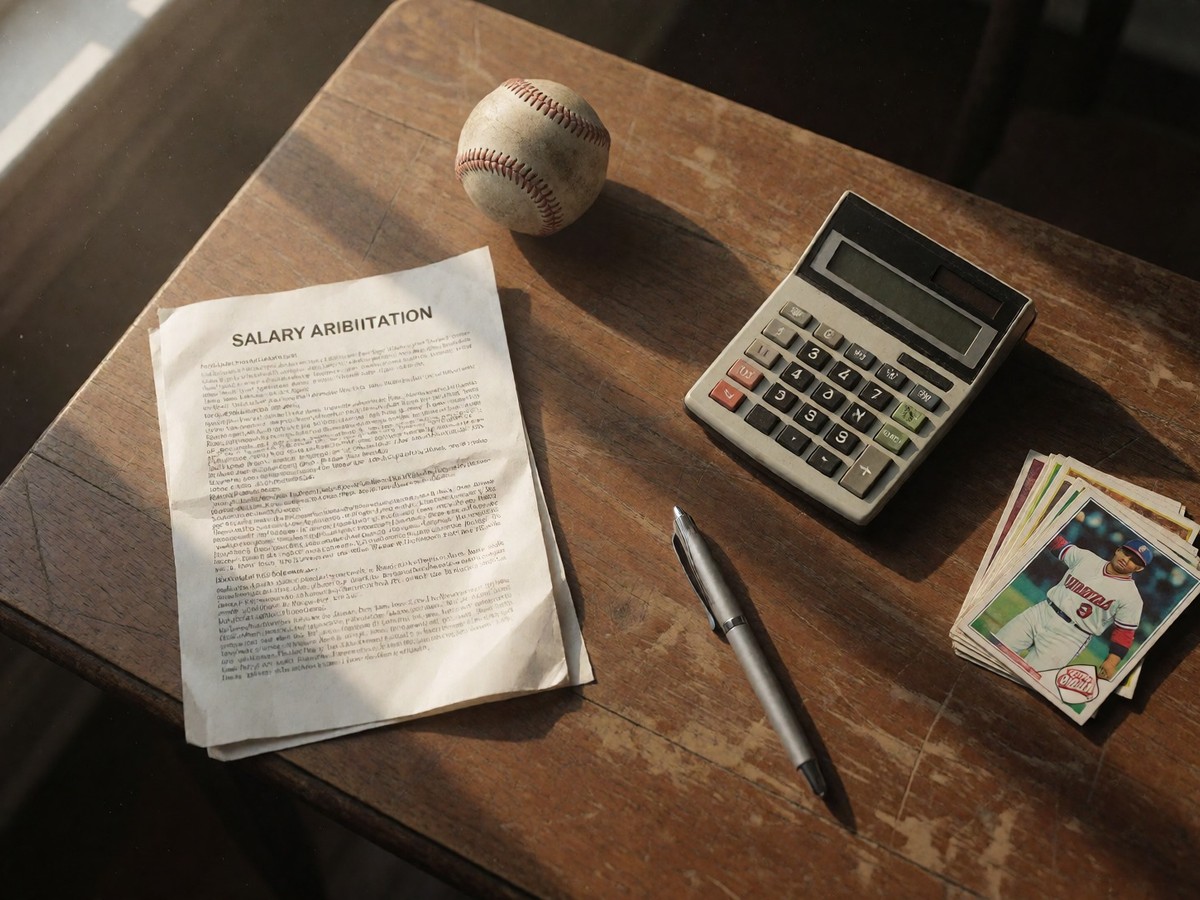
The $13 million gap between the Detroit Tigers’ $19 million offer and Tarik Skubal’s $32 million demand proves that arbitration projections often fail when they do not account for the massive leverage shifts occurring between players and owners. Most analysts expect arbitration filings to stay within a reasonable range, yet this massive discrepancy reveals how much leverage can shift. Boras seeks a new interpretation of the criteria used by arbitrators through this specific case. If the Tigers had offered $25 million, they might have avoided this record-breaking dispute. You should ignore any projection that assumes players and teams will naturally gravitate toward a middle ground. Skubal’s $21.85 million jump from his $10.15 million salary last year will set a record for arbitration earnings. He would become the first pitcher to earn in excess of $20 million in arbitration and he would surpass the $19.5 million David Price received in 2015.
The constraint problem
The fundamental mistake in reading these projections involves ignoring how bad contracts drain the liquidity needed for arbitration increases. The Angels pay Anthony Rendon $38.6 million in 2026, a figure that remains a burden even after the team restructured his deal. The Rockies owe Kris Bryant $26 million for the 2026 season. These massive obligations create a situation where a team might ignore a deserving arbitration candidate because the payroll dictates otherwise. Xander Bogaerts costs the Padres $25.45 million annually through 2033. Javier Baez carries a $24 million salary for the Tigers. Aaron Nola demands $24.57 million from the Phillies annually through 2030.
| Player | Team | 2026 Salary/Projection |
|---|---|---|
| Anthony Rendon | Angels | $38.6 million |
| Kris Bryant | Rockies | $26 million |
| Xander Bogaerts | Padres | $25.45 million |
| Aaron Nola | Phillies | $24.57 million |
| Javier Baez | Tigers | $24 million |
When a front office faces a $38.6 million obligation for a player like Anthony Rendon, the ability to approve a $5 million raise for a rising star suddenly evaporates. The Giants also face $88.3 million through 2029 for Jung Hoo Lee. The Rockies face a $12 million bill for Antonio Senzatela in 2026. The Phillies also pay $20 million to Nick Castellanos in 2026.
Pitcher projection fallacies
The Blue Jays rotation requires careful, constant management of aging stars and young arms to avoid roster instability throughout the summer. Kevin Gausman, aged 35, faces a 4.05 projected ERA for the 2026 campaign. The 30-year-old Dylan Cease carries a 3.60 projected ERA. Shane Bieber, aged 31, faces a 3.86 projected ERA as he enters his next contract year. Trey Yesavage, aged 23, carries a 3.86 projected ERA. Cody Ponce, aged 32, carries a 4.08 projected ERA. Jose Berrios, aged 32, faces a 4.52 projected ERA. Eric Lauer, aged 31, faces a 4.27 projected ERA. Braydon Fisher, aged 25, carries a 4.05 projected ERA. Mason Fluharty, aged 24, carries a 3.97 projected ERA. Justin Bruihl, aged 29, carries a 3.97 projected ERA. Paxton Schultz, aged 28, carries a 4.28 projected ERA.
The Tigers must also navigate a $53.9 million arbitration budget. This includes $5.4 million for Mize and $6.6 million for Greene. They also need a second leverage guy at $15 million or more per year. The bullpen contains players like Griffin Jax, aged 31, who carries a $3.565 million salary. Anthony Bender, aged 31, carries a $2.81 million salary. Will these small-market teams find a way to sustain their talent?