How Connor McDavid influences the Edmonton Oilers’ power-play structure
Kris Knoblauch is testing new power-play configurations to boost efficiency after the Edmonton Oilers' top unit struggled early in the season. Connor McDavid leads the offensive production with 23 power play points despite the team's recent tactical shifts.
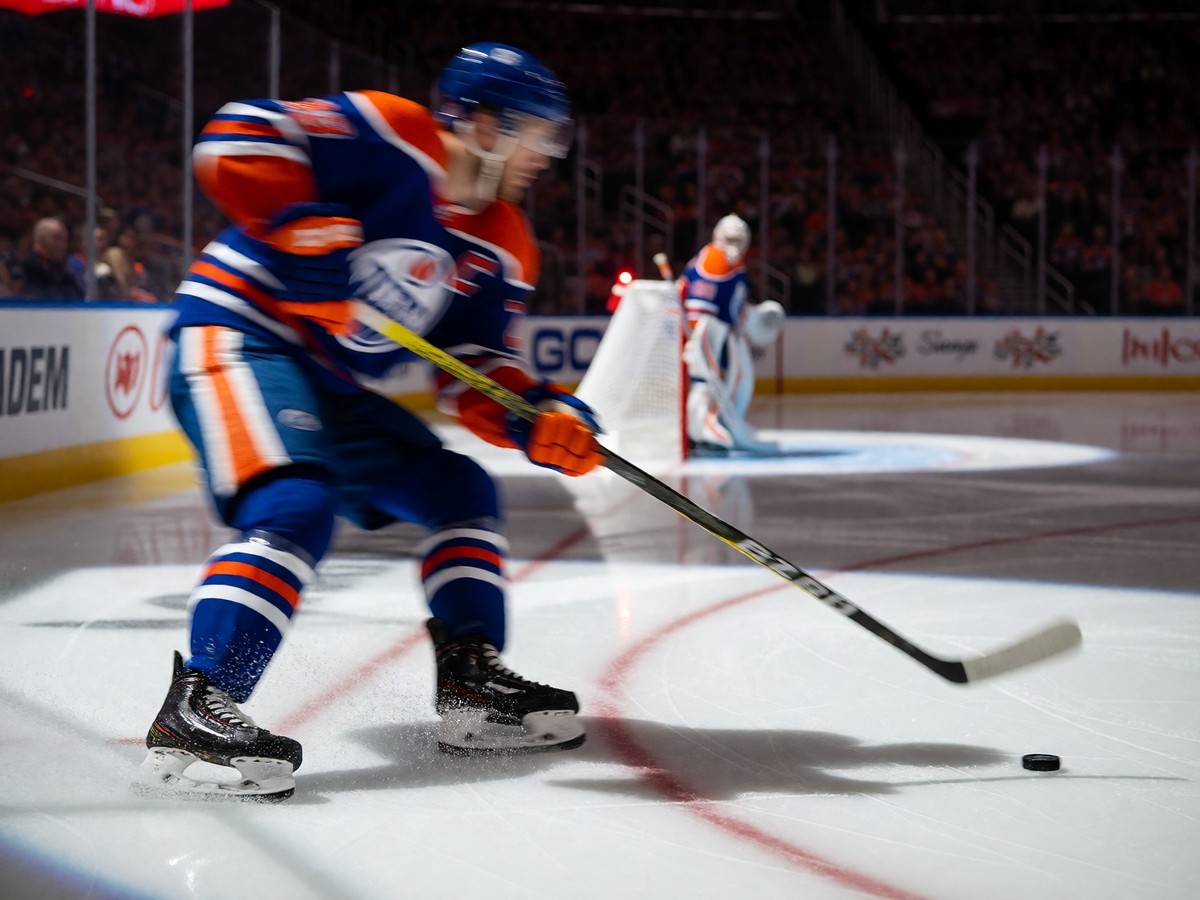
Kris Knoblauch tested a new power play configuration after the Edmonton Oilers hit a 10 per cent efficiency rate through the first seven games. This slump produced only two goals on 19 opportunities, including a 1-for-4 night against Anaheim on October 7. The previous top unit, which included Ryan Nugent-Hopkins, Zach Hyman, and Evan Bouchard, produced only five points in 21 man games. To find a different look, Knoblauch replaced that trio with Viktor Arvidsson, Jeff Skinner, and Mattias Ekholm during recent practice sessions. This new arrangement placed Connor McDavid and Leon Draisaitl on the first unit. Draisaitl noted that a shake up can be beneficial when the team cannot create the looks they want. The second unit includes the three players from the first unit alongside Adam Henrique and Darnell Nurse. Knoblauch downplayed the change, stating he simply wants to practice different looks to maintain flexibility. Hyman also mentioned that while the power play has been the best over the last five or six years, the group has not been producing at the same rate as in the past. The team’s efficiency of 26.3 per cent last year sits below the 28.5 per cent average they maintained over the last five years. The Oilers currently hold 17 wins and 4 losses, as well as 3 overtime losses. Will these tactical adjustments solve the production drought?
McDavid carries the offensive load
Connor McDavid produces the bulk of the offense even as the team struggles with consistency. McDavid led all skaters with 6 shots on goal and 10 shot attempts while logging a whopping 24:11 worth of ice time during the 2-1 loss to the Predators in Nashville. He also scored his 15th goal of the season during the second period of that contest. The Oilers currently hold a 33.8 per cent power play success rate, a mark that ranks them 18th in the league. You should observe the gap between McDavid’s production and the rest of the unit. McDavid has 23 power play points and 11 even strength goals this season, while Hyman has recorded 0 goals and 0 assists through 7 games.
| Team | PP% | GP | W | L | PTS |
|---|---|---|---|---|---|
| Anaheim Ducks | 34.6 | 23 | 11 | 11 | 23 |
| Edmonton Oilers | 33.8 | 24 | 17 | 4 | 37 |
| Calgary Flames | 26.4 | 23 | 10 | 12 | 21 |
| Montreal Canadiens | 13.0 | 23 | 14 | 5 | 32 |
The Oilers’ power play efficiency remains a priority as the team attempts to integrate young talent.
Integrating new talent
The coaching staff evaluates how to best utilize new additions to the roster. Knoblauch plans to integrate Howard into a role on the second unit because the player is offensive minded. Howard won the Hobey Baker Award in 2024-25 with 26 goals and 52 points in 37 games. The team also expects Savoie to contribute, though the coach sees him as a major part of the penalty kill in Bakersfield. Savoie produced 19 goals and 54 points in 66 games in Bakersfield. Adding these players provides the Oilers with more options at center, which helps the transition between roles. The roster includes veterans like Adam Henrique and Ryan Nugent-Hopkins who provide stability to the younger players. While McDavid continues to produce, the team must address the lack of production from the primary unit to avoid further slumps. The group ranked first in the NHL in power play percentage during the 2019-20 and 2020-21 seasons, as well as in 2022-23. This recent dip in efficiency forces the staff to consider if the long-standing structure still works against modern defensive schemes. The team looks to players like Hyman, who scored 70 goals last year, to find their form again. The organization believes these players can be impact NHL players, though the transition often involves hiccups for rookies like Savoie or Howard. The Oilers have seen several rookies score 50 or more points, including Jari Kurri with 75 in 1981, Jason Arnott with 68 in 1994, Dave Lumley with 58 in 1980, Glenn Anderson with 53 in 1981, and Ryan Nugent-Hopkins with 52 in 2012.