The evolution of the Devils defensive system
Sheldon Keefe prioritizes fast transition play and mobile skating over the neutral zone trap tactics used during the team's championship years. While Luke Hughes provides offensive value with 47 points, the system relies on balancing aggressive puck movement with defensive stability.
Moving beyond the trap
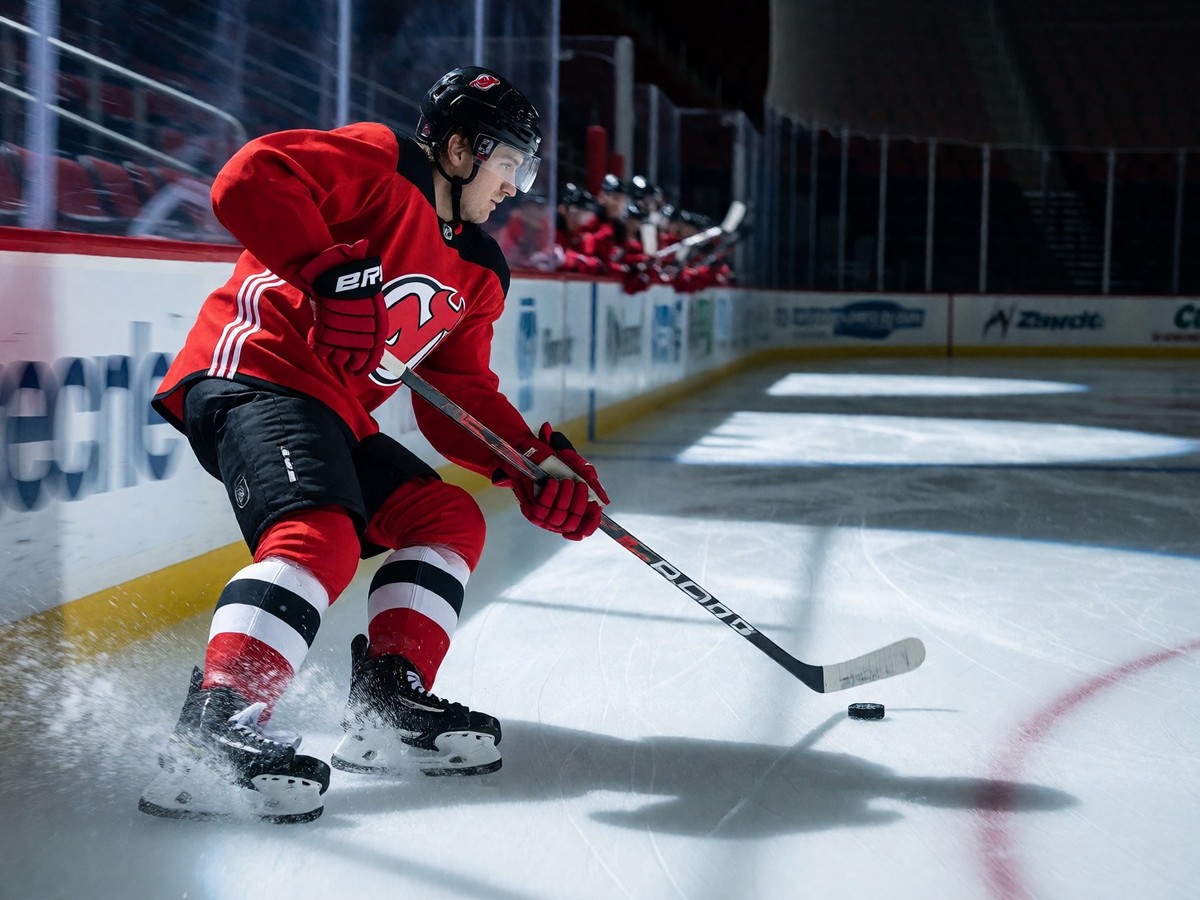
Sheldon Keefe prioritizes a fast transition game over the clogged neutral zone tactics that defined the Devils during the mid-1990s and early 2000s. While the old trap system relied on stifling opponents to force turnovers, this current approach demands that defenders move the puck quickly to avoid losing momentum. Keefe aims to build six defensemen who can coexist throughout a sixty minute game. The coaching staff emphasizes moving the puck up the ice instead of playing sideways or backwards to avoid losing positioning. This shift focuses on using skating and puck movement to drive play rather than simply waiting for mistakes. The team avoids the mistakes of the past where defenders looked for clean outlet passes while forecheckers pressured them. During the trap era, the team used five players to bottle the neutral zone, but the modern game requires more speed. The strategy used to win Stanley Cups in 1995, 2000, and 2003 focused on suffocating opponents at the blue line, a method that Keefe intends to replace with more active movement. I view Keefe’s system as a necessary, though imbalanced, shift toward modern transition play that relies on mobile skaters to avoid the stagnation of the trap era.
Personnel and tactical flaws
The roster relies on a mix of mobile skaters and stabilizing veterans. Luke Hughes uses his elite skating to walk the blue line and create passing lanes, yet he frequently struggles with in-zone defending, poor turnovers, and costly mental mistakes that disrupt the team’s momentum. Hughes recorded 9 goals and 38 assists during his rookie season, proving his offensive value despite these flaws. Jonas Siegenthaler provides defensive stability through his skating and positioning to shut down opposing forwards. Dougie Hamilton drives the offense from the blue line, which allows the team to play an aggressive style. However, Simon Nemec struggles significantly with defensive play, with some observers calling him the worst defenseman in the league. This imbalance forces the team to rely on players like Brett Pesce and Brenden Dillon to provide coverage. The team also seeks more puck-moving capabilities to prevent the defense from becoming too slow, particularly as they evaluate options for the third pairing. Ongoing discussion surrounds whether the team should trade Dougie Hamilton or Simon Nemec to gain cap space and improve skating. Without reliable puck movement, the defense often falls into the trap of moving the puck sideways.
Balancing offense and stability
The defensive system works when players jump into the play to create chances while maintaining coverage. This requires a high level of skating to prevent being caught out of position. The coaching staff avoids the old method of bottling the neutral zone with five players. Instead, they want defenders who can transition quickly. Veterans like Pesce add stability to the back end. You know the system fails when the defense moves the puck sideways instead of forcing it up the boards. This lack of urgency often leads to the team losing control of the game. The coaching staff preaches moving the puck fast to avoid the hesitation seen in previous years. The team seeks to combine the speed of players like Hughes with the discipline of the veteran core to replicate the form seen during their 112-point season. This requires a balance between offensive drivers and defensive specialists. If the defensive group cannot move the puck, the forwards cannot maintain their pressure in the offensive zone. Can the coaching staff find enough puck-moving talent to sustain this aggressive style without leaving the net exposed?