Giba and the evolution of professional volleyball economics
Giba led Brazil to the 2004 Athens Olympic gold medal, helping rebuild the sport's global appeal. Modern volleyball economics now see elite players like Zhu Ting earning up to $1.6 million as the 2026 VNL format approaches.
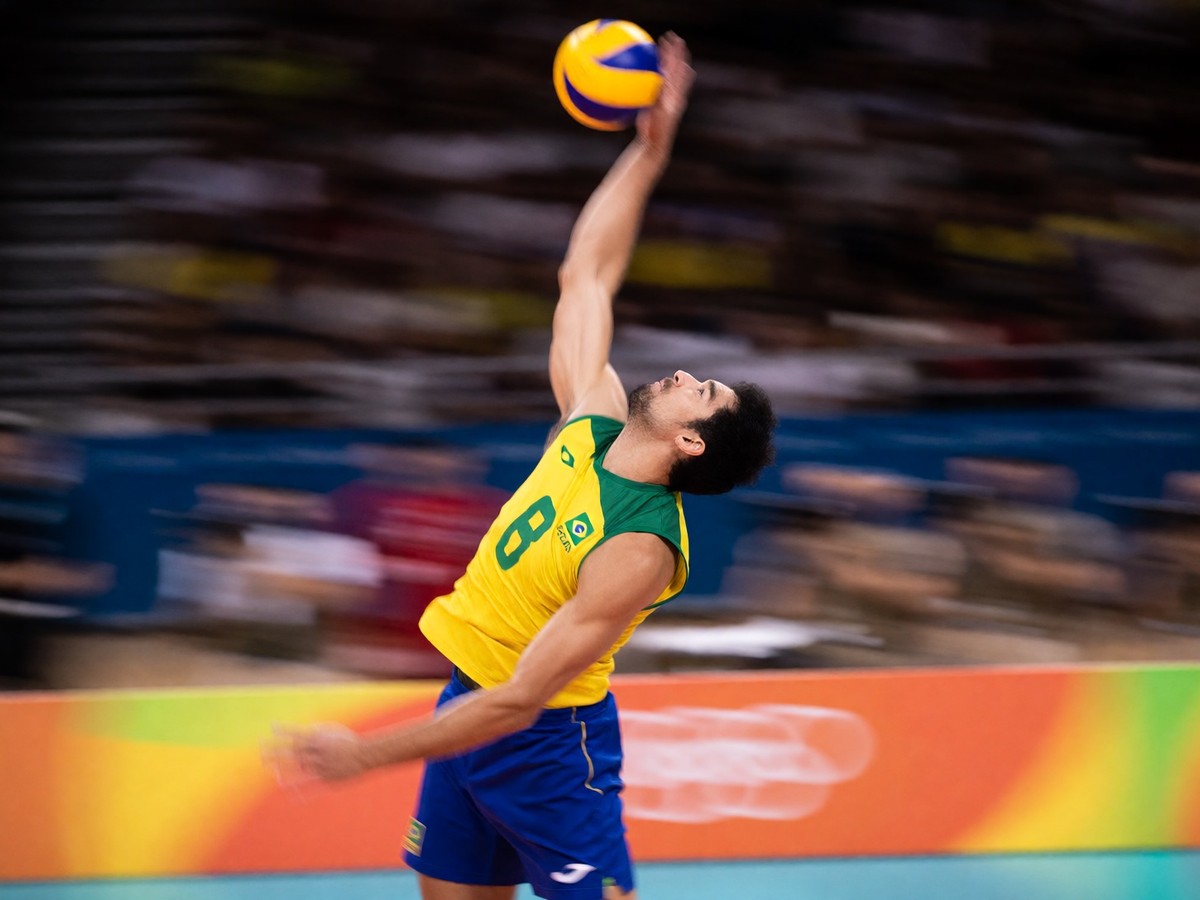
Giba and the 2004 Athens triumph
Giba, or Gilberto Amauri de Godoy Filho, led the Brazilian men’s volleyball team to the 2004 Athens Olympic gold medal. Brazil defeated Italy in three sets with scores of 25-22, 28-26, and 26-24 to take the title. Giba, who stands 1.92 m tall and weighs 91 kg, earned the Most Valuable Player title for the Athens 2004 tournament. His career includes three World Championship titles, three World Grand Champions Cup titles, and eight World League titles. Brazil reached the Olympic gold match six times. This exceeds the Soviet Union record. Giba, born in Londrina, Parana, on December 23, 1976, played for clubs such as Minas Tenis Clube, Bre Banca Lannutti Cuneo, and Pinheiros. This generation of Brazilian players won the 2003 World Cup and the 2007 World Cup. They also secured nine South American Championship titles. Giba also won a Pan American Games gold medal in 2007. He earned individual honors as the Most Valuable Player of the FIVB World League 2006. His spike reaches 325 cm, and his block reaches 312 cm. He played for Al-Nasr Dubai and IBB Polonia London later in his career.
The 2026 Volleyball Nations League format
The 2026 Volleyball Nations League includes 18 national teams in each gender. Each team plays 12 matches during the three competition weeks of the Preliminary Phase, totaling 116 matches per gender. The top eight teams from the Preliminary Phase advance to the Final Phase, while the host nation of the event receives a guaranteed berth in the Final Phase. The competition has three pools per week at three different venues. The first week runs from June 3 to June 7 in cities like Nanjing and Brasilia. The second week runs from June 17 to June 21 in cities like Quebec City and Ankara. The third week runs from July 8 to 12 in cities like Osaka, Hong Kong, and Belgrade. The Final Phase uses a direct elimination formula where the 1st-ranked team plays the 8th-ranked team, the 2nd-ranked team plays the 7th-ranked team, the 3rd-ranked team plays the 6th-ranked team, and the 4th-ranked team plays the 5th-ranked team.
| VNL 2026 Prize Money (USD) | Amount |
|---|---|
| Champions | $1,000,000 |
| Runners-up | $500,000 |
| 3rd Place | $300,000 |
| 4th Place | $180,000 |
| 5th Place | $130,000 |
| 6th Place | $85,000 |
| 7th Place | $65,000 |
| 8th Place | $40,000 |
Salary discrepancies in global leagues
Because the Turkish Sultanlar Ligi and various Asian leagues limit foreign players to one or two per roster, these markets drive up the price for elite imports and command the highest salaries in the sport. This scarcity makes the opposite hitter position particularly expensive. Tijana Boskovic earns $1.1 million per season. Aleksandar Atanasijevic earns $920,000, and Gyorgy Grozer earns $870,000. Wilfredo Leon earns $1.4 million, while Earvin N’Gapeth earns $1.35 million. Matt Anderson earns $850,000, and Dmitriy Muserskiy earns $950,000. You probably realize that women like Zhu Ting and Paola Egonu out-earn every man on the 2026 list. Zhu Ting pulls in $1.6 million, and Paola Egonu earns $1.5 million. Gabi Guimaraes earns $1.3 million, while Maxim Mikhaylov earns $1.3 million. Bartosz Kurek earns $1.1 million, and Jordan Larson earns $1.0 million. In the United States, the Major League Volleyball reported a top base salary of $175,000 for 2025. This US figure is a small fraction of the money found in European and Asian clubs. The market for elite opposites remains thin because players must choose among a very small group of names like Boskovic or Haak. Will the American domestic league ever overcome the massive financial advantages found in the Turkish Sultanlar Ligi?