The physical toll on Wilfredo Leon’s workload
Wilfredo Leon faces significant physiological risks during his title defense, as overhead hitting causes 38% of shoulder injuries. High game density and repetitive landing mechanics increase the likelihood of knee and ankle issues for professional attackers.
Shoulder mechanics and overhead force
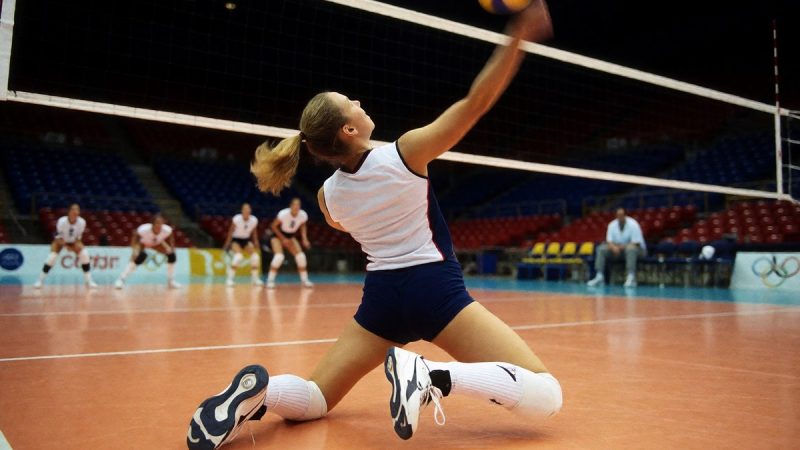
The repetitive motion of attacking puts the shoulder at extreme risk. Spiking and jump serving share a motor pattern consisting of approach, takeoff, arm cocking, arm acceleration, and follow-through. These motions generate significant force and torque. Overhead hitting techniques cause 38% of shoulder injuries in volleyball. For professional players, shoulder injuries account for 20% of all cases. These issues include rotator cuff tendinopathy, proximal biceps tendonitis, and glenoid labrum tears. Since the dominant shoulder undergoes maximal external rotation and quick recoil during the acceleration phase, injuries such as impingement syndrome, scapular dysfunction, and nerve injury remain constant threats. The spike generates ball speeds of almost 28 m/s, reaching receivers as fast as 0.3 s. Outside hitters account for 58% of professional volleyball injuries. In professional matches, shoulder dislocations account for 2% of all injuries, while elbow issues like lateral epicondylitis are 0.6% of cases. Shoulder injury functional recovery reaches 85% after 6 months. Does the sheer volume of attacks this season exceed the threshold for tendon repair? You know how these repetitive movements degrade joint integrity over time.
Lower extremity landing impacts
Landing mechanics drive much of the lower body injury profile. The knee is the most common injury site, which accounts for 25% of all volleyball injuries. Because landing techniques account for 41% of knee injuries, professional players must manage the heavy impact of jumping to avoid the patellar tendinopathy and meniscus tears that frequently follow intense competition during long grueling seasons. Age-related changes like cartilage degradation contribute to 18% of knee injuries in players over 30. For attackers, the forces from jumping and landing lead to patellar tendinopathy, ACL tears, meniscus tears, stress fractures, and ankle sprains. Specifically, ACL tears are 3% of all injuries. Ankle injuries are 18% of all injuries, and acute ankle sprains are the most common acute injury at 22% of all cases. While the return-to-play rate for ankle sprains is 92%, the recurrence rate is 15%. Non-contact mechanisms, including landing and twisting, drive 73% of all volleyball injuries.
| Injury Site | Total Injury % | Specific Injury Type |
|---|---|---|
| Knee | 25% | Patellar tendinopathy |
| Shoulder | 20% | Rotator cuff tendinopathy |
| Ankle | 18% | Lateral ligament sprains (4%) |
| Wrist/Hand | 12% | Scaphoid fractures (1%) |
| Finger | 7% | Mallet finger (0.7%) |
Middle blockers face a 15% higher risk of ankle injuries, and liberos account for 29% of lower extremity injuries. ACL reconstruction requires 9 months for return-to-play. The recurrence rate for ACL injuries is 23%.
Professional workload and age factors
Professional athletes face specific physiological pressures. Ninety-one percent of professional volleyball injuries occur in players aged 25 to 35. For players in this age bracket, the risk of overuse injuries is 1.8x higher. Overtraining contributes to 22% of overuse injuries. High game density, such as multiple games in a single day, causes 14% of injuries. Muscle imbalances contribute to 35% of injuries. Most volleyball injuries are acute, at 68% of the total, while 32% are overuse-related. Acute injuries occur during game play in 61% of cases. Overuse injuries occur during training in 54% of cases. Professional competition carries an injury incidence of 4.9 per 1000 player-hours, while training carries 3.6 per 1000 hours. Seniors face a two-times greater risk of time-loss injuries than juniors. NCAA men’s volleyball shows an injury rate of 4.69 per 1000 athlete exposures, while female collegiate volleyball players have 9.2 injuries per 1000 athlete exposures annually. Regarding other sites, wrist injuries are 5% of scaphoid fractures (1% of all), finger injuries are 3% mallet finger (0.7% of all), spinal injuries are 2% lumbar strains (0.6% of all), and hip injuries are 2% labral tears (0.6% of all). Head and neck injuries are 3% of total cases, and foot injuries like plantar fasciitis are 2% of all injuries.