The scale of the Hero World Challenge risks
Competitive pressures mount for participants as performance fluctuations impact future eligibility for 2027 Signature Events. The tournament landscape shifts as players like Koivun face risks regarding their standing in the professional golf circuit.
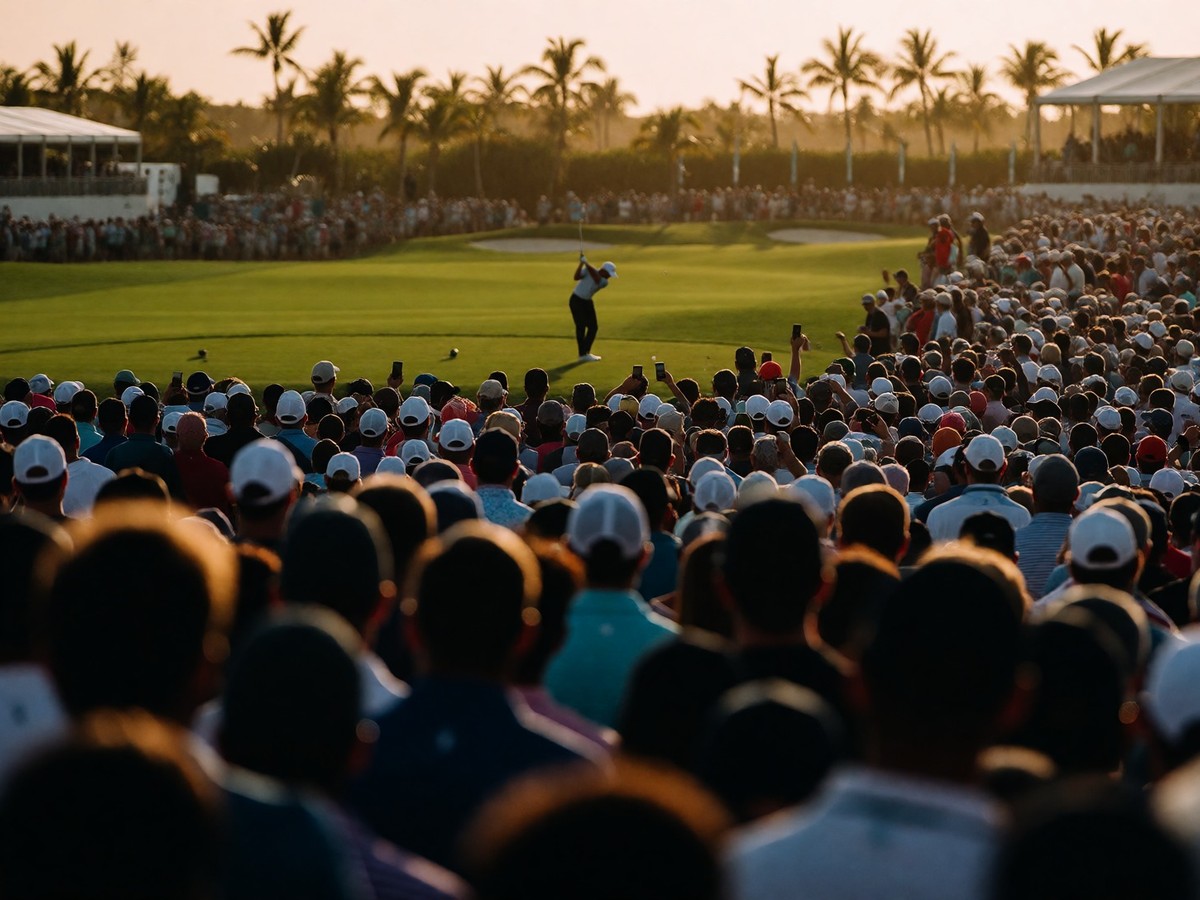
The nature of the Hero and Tiger branding
The Hero World Challenge name invokes the definition of a hero, which Merriam-Webster describes as a person admired for great or brave acts. In classical literature, the hero is the main or revered character in heroic epic poetry who strives for glory and honor. These figures often exhibit feats of ingenuity, courage, or strength to combat adversity. However, historical accounts show that classical heroes can be foolhardy, court disaster, or behave arrogantly in a childlike manner. Achilles, a Greek hero, famously exhibited uncontrollable rage that defined his bloodthirsty actions. The concept of the Mythic Hero Archetype, developed by Lord Raglan, suggests these figures follow specific patterns across various cultures. The word hero comes from the Greek heros. The earliest evidence of the word hero in English dates to before 1522, appearing in a translation by Gavin Douglas. The first use to denote women of divine origins appeared in 1587. The Tiger element of the name connects to the Panthera tigris, a large cat and member of the genus Panthera native to Asia. The tiger (Panthera tigris) is a large cat and a member of the genus Panthera native to Asia, characterized by a powerful, muscular body and orange fur that fades to white in parts, with black, mostly vertical stripes. This apex predator is traditionally classified into nine subspecies, including the Bengal, Malayan, Indochinese, South China, Siberian, Caspian, Javan, Bali, and Sumatran tigers. Major threats to these animals include habitat destruction and fragmentation due to deforestation, poaching for fur, and the illegal trade of body parts. The tiger population has lost at least 93% of its historic range since the early 20th century. It is listed as Endangered on the IUCN Red List, as its range is thought to have declined by 53% to 68% since the late 1990s. Breeding these hybrids, such as ligers and tigons, is regarded as unethical.
Evaluating the biggest competitive pressures
The term biggest describes things that are large, sizable, or substantial. At the World Wide Technology Championship, Chris Kirk leads the field with a score of -9 after a round of 63. Nick Dunlap follows at -8 after a 64. Matthieu Pavon, Harry Hall, and Taylor Montgomery all sit at -7 after shooting 65. Kensei Hirata also holds a -7 score after a 65. Other players like Peter Malnati, Ryan Gerard, Blades Brown, Karl Vilips, Joe Highsmith, and Alejandro Tosti are tied at -6. Beau Hossler is at -6 after 16 holes. You can see the pressure building as these players fight for position. Zach Bauchou, Ben Martin, Brice Garnett, Rico Hoey, Johnny Keefer, Will Gordon, Max Greyserman, and Andrew Putnam all remain at -5. Ben James and Patton Kizzire also hold scores of -5. Chad Ramey and Denny McCarthy are at -4 after finishing their rounds. Matt Kuchar, Keith Mitchell, Taylor Pendrith, Adam Svensson, Patrick Rodgers, and Kristoffer Ventura are tied at -4. David Skinns and Kevin Streelman follow at -3.
The broader tournament landscape
The tournament landscape involves shifting probabilities for all participants. Koivun is among the players who could miss 2027 Signature Events. This highlights how performance fluctuations impact future eligibility. The competition is driven by the desire for glory, which remains a core goal for those following the classical hero archetype. The concept of the hero’s journey, or monomyth, involves stages like the Departure, Initiation, and Return. This journey, expounded by Joseph Campbell, includes archetypes like the call to adventure and the road of trials. Will the competitive field maintain its stability as the season progresses?