Economics of Dodgers bullpen management and luxury tax navigation
The Dodgers face a projected $183,362,968 luxury tax bill due to a $413.6 million payroll. This financial pressure complicates Dave Roberts's postseason bullpen decisions as starters like Blake Snell average only 4.67 innings per postseason start.
The Dodgers’ financial strategy clearly centers on a $413.6 million luxury tax payroll
The Dodgers pay $413.6 million toward the luxury tax, which exceeds the $244 million threshold by $169.6 million. Because the team is a tax repeater, it faces a 50% base rate penalty on all spending over the threshold. For spending that exceeds the threshold by more than $60 million, the marginal tax rate reaches 110%. Shohei Ohtani earns $2 million in cash this season, yet his $70 million salary counts as more than $46 million toward the tax due to the present-day value of his deferred money. Kyle Tucker also has deferred money in his $240 million contract, meaning his $60 million average annual value counts as $57.18 million toward the luxury tax. This spending profile forces the organization to manage a projected tax bill of $183,362,968. The team also owes $1.08 billion in deferred money across current contracts. Such high spending increases tensions between players and owners as the collective bargaining agreement expires in December, and many believe this could lead to a lockout in 2027. The pre-arbitration bonus pool rewards top-performing young players with under three years of service time through a $50 million pot. You might think the cash payroll of $249.3 million tells the whole story, but the tax obligations change the math completely.
The Dodgers’ starting rotation clearly provides the depth necessary to offset a struggling bullpen
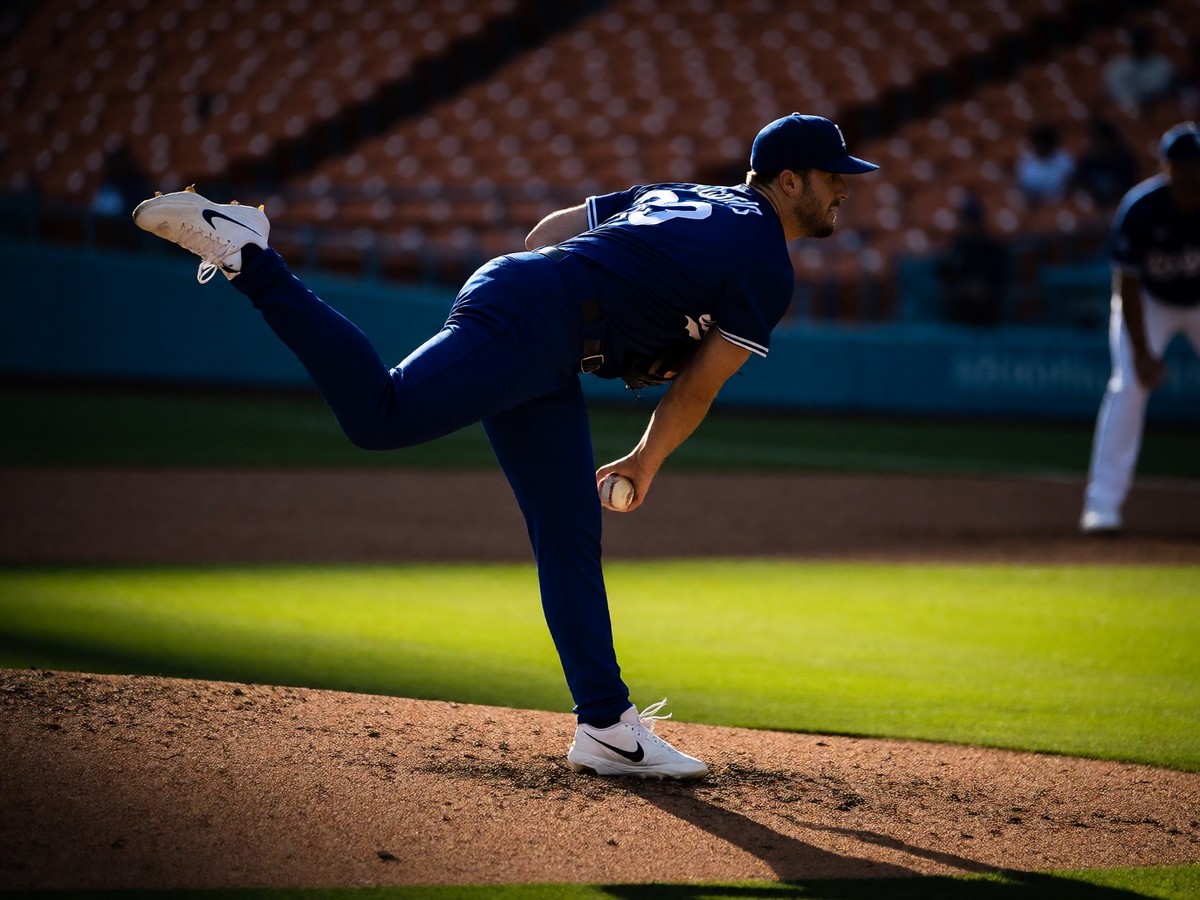
The Dodgers bullpen ranks 19th in the majors in earned-run average. Closer Tanner Scott holds a 4.47 ERA, while Kirby Yates carries a 4.71 ERA. Dave Roberts must decide if he can trust these relievers to cover the final innings of a postseason game when the starters fail to reach the sixth inning. For instance, Blake Snell has not completed six innings in any of his ten postseason starts, and Yoshinobu Yamamoto crossed the sixth-inning threshold only once in four postseason starts. These starters have averaged 4 2/3 innings in their postseason appearances. When the starters fail to provide length, Roberts faces the difficult decision of whether to use a struggling bullpen or leave a pitcher in who might struggle to finish the game after several high pitch counts. Blake Treinen has struggled with consistency since returning from a forearm sprain. The starting rotation has provided relief, ranking second in the majors in innings pitched since August with a combined 3.31 ERA. The rotation includes Yamamoto, Snell, Glasnow, Ohtani, and Clayton Kershaw. Ohtani has never pitched in the playoffs. Tyler Glasnow recently completed seven innings while throwing 105 pitches.
| Postseason Starter | Avg. Innings |
|---|---|
| Blake Snell | 4.67 |
| Tyler Glasnow | 4.67 |
| Yoshinobu Yamamoto | 4.67 |
The new challenge system clearly introduces a way for players to hold umpires accountable
The 2026 season introduces a challenge system for balls and strikes. Each team receives two challenges per game. If the pitcher, catcher, or batter calls for a review and the decision remains unchanged, the team keeps the challenge. If the official review overturns the call, the team loses a challenge. The rule requires the player to act right away without a sign from the dugout. During spring training tests, teams averaged four challenges per game, which added about one minute to the game duration. Players overturned calls in slightly more than half of those instances. The ability to challenge keeps players on their toes. Can the Dodgers use these challenges to protect their pitching staff from questionable calls during high-stakes October games?
| Challenge Rule | Value |
|---|---|
| Starting Challenges | 2 |
| Success Rate | >50% |
| Added Time | ~1 minute |