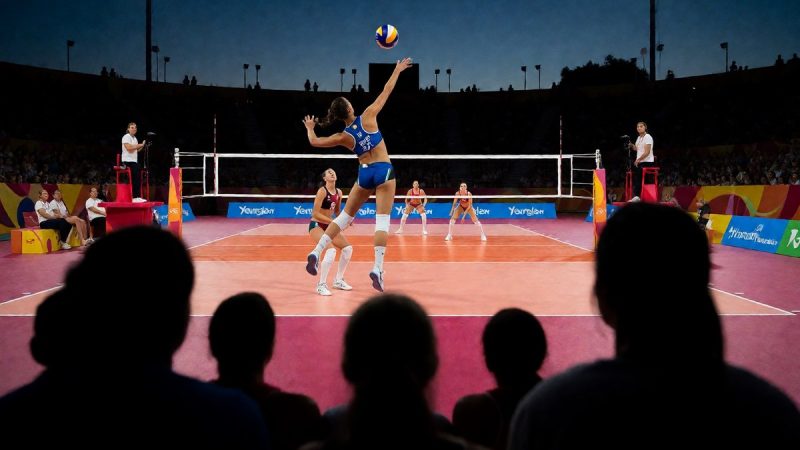
FIVB Volleyball Nations League 2026 finals qualification format explained
The 2026 VNL featured 18 teams per gender, with the top eight advancing to a knockout final phase where China held a guaranteed spot. Poland won the men's title by defeating the United States 3-2, while Turkey beat Brazil 3-1 to claim the women's championship.

The 2026 VNL featured 18 teams per gender, with each squad playing exactly 12 preliminary matches. The top eight teams advanced to the Final Phase, while the host nation, China, secured a guaranteed berth regardless of its preliminary standing. This structure repeated the 2025 formula, where Belgium replaced the relegated Netherlands in men’s competition and Ukraine took South Korea’s spot in women’s play. A team must win three consecutive knockout matches to claim the title, making the final bracket a high-stakes elimination gauntlet for the elite.
How the preliminary phase works
Teams played four matches per week across three competition weeks, with all results feeding into one unified 18-team standings table rather than separate pool rankings. The scheduling algorithm grouped teams by sporting strength so each side faced four opponents from each ranking group over the season. Points awarded followed a strict hierarchy: 3 points for a straight-set or four-set win, 2 for a five-set victory, and 1 point for the loser of a five-set match. If teams tied on total victories, the FIVB applied tiebreakers in order: match points, set ratio, point ratio, head-to-head results, and finally FIVB World Ranking if the teams had not met directly.
This system creates clear incentives for consistent performance, as a single loss can drop a team out of the top eight. You already know the basics of volleyball scoring, but this specific point allocation means a 3-2 win is worth less than a 3-1 win, which shapes how teams manage their efforts in close sets. The last-placed team faced relegation, with the highest-ranked non-participating team earning promotion for the next cycle.
The final eight knockout structure
The Finals used a direct elimination formula where the first-ranked team faced the eighth seed, second against seventh, third against sixth, and fourth against fifth. If China finished outside the top eight preliminarily, it replaced the eighth-place team and entered as the eighth seed facing the Preliminary Phase winner. Quarterfinal losers were ranked 5th through 8th based on their overall tournament performance, including preliminary results. Semifinal matchups paired the winners of QF1 versus QF4 and QF2 versus QF3, leading to a bronze medal match between semifinal losers and a gold medal match between winners.
| Match | Pairing |
|---|---|
| QF1 | 1st vs 8th |
| QF2 | 2nd vs 7th |
| QF3 | 3rd vs 6th |
| QF4 | 4th vs 5th |
| SF1 | Winner QF1 vs Winner QF4 |
| SF2 | Winner QF2 vs Winner QF3 |
Individual prize money totaled $100,000 per gender, with $10,000 going to leaders in seven statistical categories and $30,000 reserved for the MVP selected via combined fan and expert voting from gold medal match participants. Poland won the men’s title by defeating the United States 3-2, while Turkey claimed the women’s championship over Brazil 3-1. The format clearly favors teams that maintain consistency throughout the preliminary phase, as seeding determines bracket position and potential path length.