What the numbers say about Terence Crawford’s 2026 welterweight unification push
Terence Crawford retired with a 42-0 record and 31 knockouts after defeating Canelo Alvarez before 70,482 fans. His welterweight reign featured five consecutive stoppage victories, including a TKO over Jose Benavidez Jr., establishing his dominance before moving up in weight.

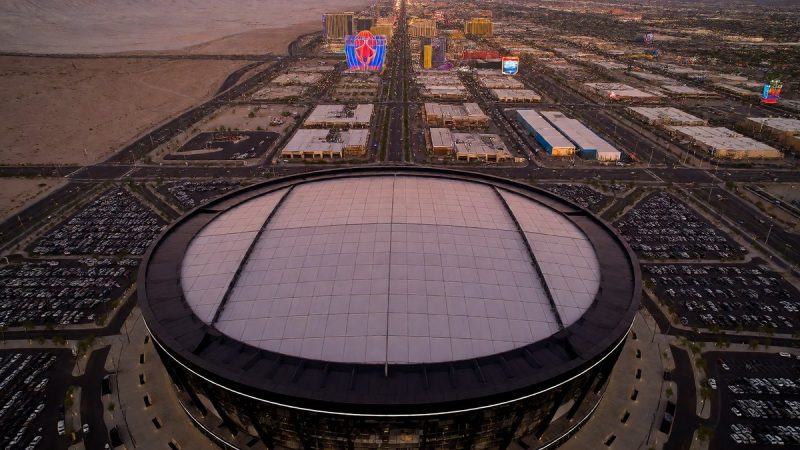
Terence Crawford retired with a 42-0 record and 31 knockouts, ending his career as the only male boxer to capture three unified division titles. The final victory over Canelo Alvarez at Allegiant Stadium in Las Vegas drew 70,482 fans and secured the super middleweight championship. This achievement followed a decade of dominance where he won belts in lightweight, super lightweight, welterweight, and super welterweight divisions before moving up two more weight classes for that final bout. His last twenty fights all came with a belt on the line, proving his consistent ability to win major stakes.
The Welterweight Record
The statistical case for his early dominance is clear when looking at his time at 147 pounds. Crawford entered the division by stopping Jeff Horn in the ninth round, then defended against Jose Benavidez Jr. in Omaha. He beat Benavidez by TKO in the twelfth round, maintaining his undefeated streak while improving his knockout count. Subsequent defenses against Amir Khan and Egidijus Kavaliauskas resulted in stoppages in six and nine rounds respectively. Each opponent faced overwhelming odds, with bookmakers listing Crawford as a heavy favorite at 1.04 to 1.18. These figures reflect a fighter who controlled the pace and power dynamics completely.
I find the gap between these opponents and true contenders stark. The data shows Crawford winning by wide margins or early stops, yet the division lacked a peer who could test his limits consistently. When he finally faced Errol Spence Jr., the narrative shifted toward a genuine unification battle. Spence held the IBF, WBA, and WBC titles, while Crawford kept the WBO belt. Their fight was scheduled for June 17 in Las Vegas after extended contract negotiations. The odds favored Crawford slightly, but Spence’s 28-0 record with 22 knockouts made him a serious threat. This matchup represented the peak of the welterweight class before Crawford moved higher.
| Opponent | Result | Round | Odds |
|---|---|---|---|
| Jeff Horn | TKO | 9 | 1.18 |
| Jose Benavidez Jr. | TKO | 12 | 1.04 |
| Amir Khan | TKO | 6 | 1.08 |
| Egidijus Kavaliauskas | TKO | 9 | 1.04 |
| Shawn Porter | TKO | 10 | 1.14 |
The table above lists his five most recent welterweight bouts. All ended in stoppage victories, confirming his technical superiority. However, the lack of close decisions suggests a ceiling in competitive pressure. Fans often debated whether he could handle bigger fighters like Spence, whose deliberate body attack differed from the frantic styles Crawford usually dismantled. The question remains whether his power translated fully against elite resistance.
The Final Chapter
Crawford announced his retirement shortly after beating Alvarez, stating he had made peace with what was next. He turned pro in 2008 and spent nearly two decades chasing perfection. The decision to stop rather than chase another massive payday speaks to his control over his career. He represented Omaha, Nebraska, with pride, fighting for his family and the city. The sport gave him everything, and he chose to exit on top.
His legacy rests on those 42 wins without a loss. The numbers do not lie about his efficiency or impact. While some might argue he should have fought longer, the record stands complete. I respect the choice to retire while unbeaten. It preserves the narrative of invincibility. Whether he would have succeeded in further weight jumps is irrelevant now. The facts show a fighter who mastered every level he touched.
Did he leave anything on the table? That is a question for history to answer. For now, the stats define his era.