Dodgers payroll exceeds $410 million amid luxury tax race
The Dodgers face an estimated $170.9 million tax bill due to a $410.8 million competitive balance tax payroll. This massive spending allows the team to manage deferred contracts for stars like Shohei Ohtani while navigating escalating surcharge tiers.
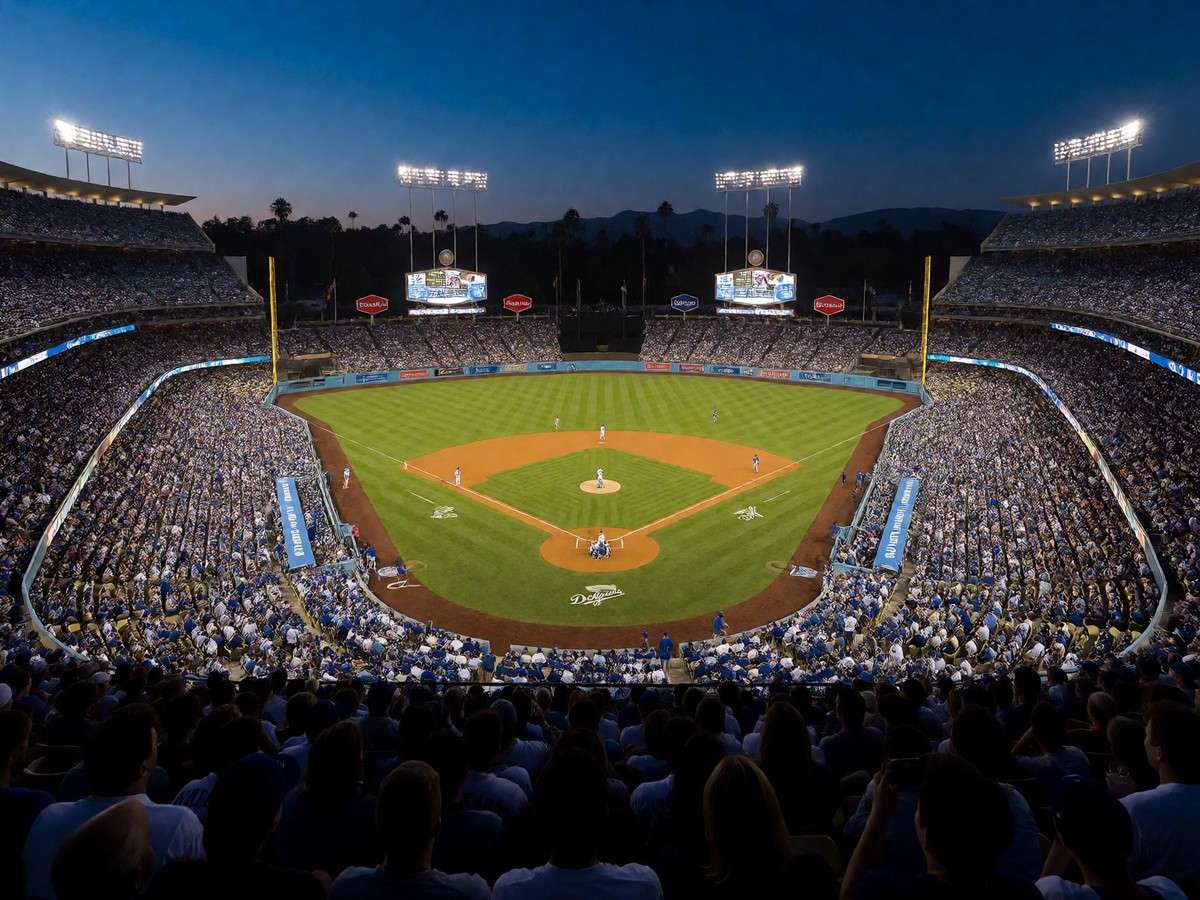
The Dodgers’ opening day 2026 payroll for competitive balance tax purposes reached $410.8 million. This figure differs from the $261.7 million the team actually paid this year because ten players have parts of their salaries deferred. Shohei Ohtani holds the largest deferred portion with a $680 million contract. Under the collective bargaining agreement, clubs must fully fund deferred compensation obligations by the second July 1 following the championship season in which the money is earned. This discrepancy allows the team to maintain a massive roster while managing immediate cash flow. The 40-man roster payroll also includes approximately $2.5 million for minor league players and a $19 million share for the pre-arbitration bonus pool. The $37.25 million on the injured list is the highest the team has recorded since 2019. They face an estimated tax bill of $170,950,224.
The team’s status as a third-time payor subjects them to a 50% base tax rate on all spending above the $244 million threshold. For expenditures exceeding $60 million above that limit, the marginal tax rate reaches 110% when combining the 50% base rate and the 60% surcharge. The Dodgers must navigate these escalating penalties to keep stars like Kyle Tucker and Edwin Diaz on the roster. You should understand that these high costs do not stop wealthy franchises from spending. The Dodgers’ $170.9 million tax projection alone exceeds the total payroll of 16 other Major League Baseball teams.
Dodgers contracts and heavy penalties
Blake Snell received only $12.8 million this year despite a $31.357 million CBT payroll because he deferred over half his salary and took his $52 million signing bonus in 2025. Teoscar Hernandez also received only $4 million in actual payroll compared to $19.96 million for CBT purposes because he deferred $8 million of his $12 million salary. These accounting methods help the Dodgers stay competitive despite the massive tax bill. Last season, the Dodgers paid a record $169,375,768 in luxury taxes on a $417,341,608 competitive balance tax payroll. This massive spending power allowed them to win back-to-back championships, even as the Phillies paid $56,062,903 in luxury taxes. In 2024, the Dodgers paid $103 million in tax alone, contributing to a combined $311 million in penalties from nine teams.
Padres manage smaller tax penalties
San Diego’s projected competitive balance tax payroll for 2026 stands at $270,839,923. As a second-time payor, the Padres face a 30% base tax rate. Their projected tax bill totals $4,364,130, which includes a 12% surcharge on the amount exceeding $20 million above the threshold. The Padres must manage a payroll that includes $1,666,666 for the pre-arbitration bonus pool. This follows a 2025 tax payment of $6,992,447. The 2026 threshold for all teams rises to $244 million from the $241 million used in 2025. While the Dodgers fight for a third straight World Series with 100 wins, the Padres sit at 91 wins with a clinched postseason berth in the National League Wild Card spot.
| Rule/Tier | Threshold/Limit | Rate/Penalty |
|---|---|---|
| 2026 Base Threshold | $244,000,000 | N/A |
| First-Time Payor | Over $0 | 20% |
| Second-Time Payor | Over $0 | 30% |
| Third-Time Payor | Over $0 | 50% |
| Surcharge Tier 1 | $20M – $40M | 12% |
| Surcharge Tier 2 | $40M – $60M | 45% |
| Surcharge Tier 3 | Over $60M | 60% |
CBA negotiations loom in 2027
The current collective bargaining agreement expires in December 2026, which sets the stage for intense negotiations regarding the luxury tax. Owners may propose a hard salary cap or higher surcharge tiers to increase the punitive nature of the system. Players will likely push for a higher threshold to allow more spending. In 2025, nine teams exceeded the threshold, including the Mets who paid $91,637,501 and the Yankees who paid $61,774,820. The Rangers also exceeded the $241 million threshold last year, paying only $190,483 in luxury taxes. Revenue sharing aims to distribute money to teams, with the percentage increasing from 31% to 48% in the 2017 agreement.
The luxury tax revenue funds player benefits and retirement accounts, while half of the remaining proceeds go to a Commissioner’s Discretionary Fund. For teams exceeding the threshold by more than $40 million, the surcharge jumps to 45% and the highest draft pick moves back 10 spots. The Dodgers’ heavy spending continues to fuel debates about competitive balance in the National League West. One team’s tax penalty can exceed what half the league spends on its entire roster. Owners might push for higher tax rates, similar to how the 2022 agreement adjusted surcharges to 42.5% and 45%. Will the owners successfully implement a hard cap to stop this trend?