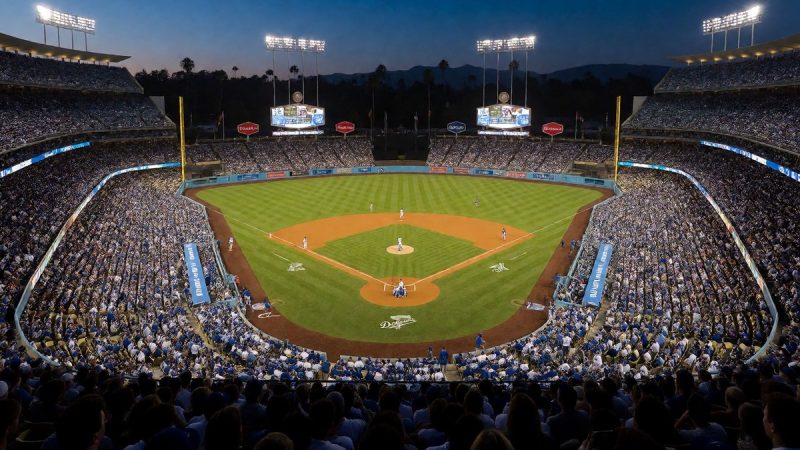
Mastering the Dodgers’ postseason bullpen approach
Dave Roberts utilizes a closer-by-committee strategy to manage high-leverage relievers like Tanner Scott and Evan Phillips. This method focuses on deploying specific arms for difficult matchups to protect pitcher workloads during the postseason.
Dave Roberts manages the Los Angeles Dodgers to a .621 winning percentage and three World Series titles in 2020, 2024, and 2025. He won 907 regular-season and postseason games from 2016 to 2024. His postseason bullpen strategy relies on a closer-by-committee approach rather than a single set option. He selects relievers based on the specific situation or "lane" required in the eighth or ninth innings. During the 2026 postseason, Roberts views Tanner Scott, Evan Phillips, Roki Sasaki, and Edwin Diaz as capable of closing games. Sasaki earned two saves in the 2026 postseason after showing elite velocity near 101 mph. Phillips provides reliable relief following his return from Tommy John surgery. This method focuses on throwing the best available arms at the most difficult matchups. He avoids leaning on a single closer to protect the arms of his primary staff. In Game 5 of the 2024 World Series, Roberts used a beleaguered group of relief pitchers to allow for a comeback victory.
The tension of in-game discretion
Roberts must balance front-office data with immediate on-field judgment. The organization uses advanced analytics to dictate rotation and fatigue management, but Roberts often makes impromptu decisions. On September 18, 2025, Shohei Ohtani pitched five innings of a no-hitter before Roberts signaled for a change to Wrobleski in the 6th inning. Wrobleski allowed four consecutive hits and a three-run homer, losing a four-run lead. On September 6, 2025, Roberts pulled Yoshinobu Yamamoto after a solo home run in the 9th inning to bring in Blake Treinen. Treinen carried a 9.64 ERA over his previous seven games, and his subsequent appearance led to a walk-off grand slam. You already know the Dodgers roster has enough depth to withstand injuries, but these sudden moves create volatility. Roberts also faces criticism for failing to rest stars like Shohei Ohtani or Freddie Freeman during performance slumps. In 2026, umpires even barred Roberts from using position player Zach McKinstry to pitch in the ninth inning against the Mets because the team trailed by five runs or fewer. How much weight does he give to a player’s expressed desire to continue pitching?
Managing workload and reliability
The Dodgers aim to balance quantity with quality to keep their primary arms fresh for October. Roberts uses a succession of high-leverage relievers to ensure no hitter receives too many looks at the same pitcher. This strategy helped the team during the 2024 postseason when they faced the Padres and the Mets. However, the effectiveness of this rotation depends on the health of specific veteran arms.
| Pitcher | 2025 Stats | 2026 Role |
|---|---|---|
| Tanner Scott | 4.44 ERA (50 games) | Primary Closer |
| Kirby Yates | 4.72 ERA (42 games) | Reliever |
| Blake Treinen | 5.40 ERA (32 games) | High-leverage |
| Kenley Jansen | 1.32 ERA | Anchor |
In 2026, the bullpen faced instability when Edwin Diaz struggled with injuries and ineffective outings in August. Roberts maintained trust in Diaz despite these setbacks, though the team eventually saw Tanner Scott and Edgardo Henriquez step up as more stable alternatives. In the 2025 season, the Dodgers acquired several high-priced pitchers, but many failed to meet expectations. Tanner Scott posted a 4.44 ERA over 50 games, and Kirby Yates posted a 4.72 ERA over 42 games. When the Dodgers faced the Padres in the 2024 National League Division Series, Roberts successfully navigated bullpen games by deploying a succession of high-leverage arms that prevented any single hitter from getting too many looks at the same pitcher. This approach keeps the staff ready for the high demands of October. Kenley Jansen remains the anchor of the unit, having recorded 11 postseason saves over his career. His postseason ERA was 2.05 despite facing heightened competition.