Pacific Division goaltending shifts and roster changes
Thatcher Demko faces a popliteus muscle injury that may sideline him for weeks, while Adin Hill's new six-year contract extension impacts the Vegas Golden Knights' salary cap. New NHL rules regarding dedicated EBUGs also change how teams manage goaltender workload and rest.
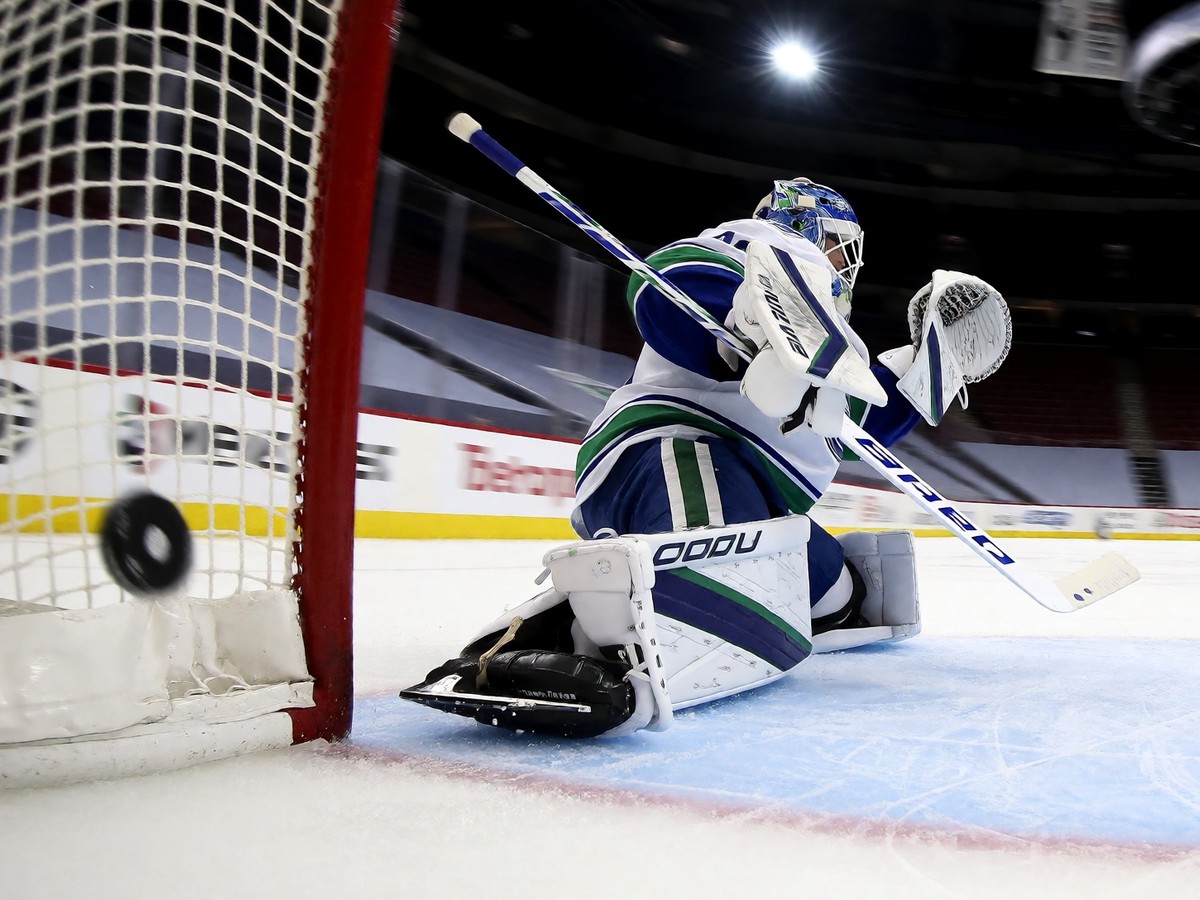
Vancouver’s Net Situation
Thatcher Demko faces a popliteus muscle injury that sidelined him during a 5-0 loss to Toronto. Head coach Adam Foote expects the 30-year-old to miss a week or two, though he noted the situation might require shutting him down for the campaign. Nikita Tolopilo joined the roster from the Abbotsford Canucks under emergency conditions to cover the absence. Demko currently carries an 8-10-1 record with a 2.90 goals-against average and one shutout. Silovs remains the primary backup for Vancouver. Demko previously missed 12 games in November and December because he recovered from a different lower-body injury. The popliteus muscle issue affects the back of the knee. Vancouver also faces injuries to defenseman Derek Forbort and centers Marco Rossi, Teddy Blueger, and Filip Chytil. While winger Conor Garland returns to the lineup, the team lacks Kiefer Sherwood, who has 17 goals, due to an undisclosed ailment. The Canucks must address these roster gaps before the March 6 trade deadline.
Vegas Contract and Tandem Dynamics
The Vegas Golden Knights signed Adin Hill to a six-year, $37.5 million contract extension. This deal carries a $6.25 million average annual value. Hill shows significant inconsistency. This contract is too expensive for his actual ability level. The organization continues to utilize a tandem system with Logan Thompson. Hill’s deal includes a modified no-trade clause with an eight-team list during the first year and a five-team list during the second year. Hill previously earned a $4.9 million AAV after leading the team to a Stanley Cup. He finished that postseason with an 11-4 record, a 2.17 goals-against average, and a .932 save percentage. During the regular season, Hill went 16-7-1 with a 2.50 goals-against average in 25 starts. Hill was acquired from San Jose for a 2024 fourth-round pick. The club also issued qualifying offers to Jiri Patera, Pavel Dorofeyev, and Brett Howden. This Hill signing leaves the Golden Knights roughly $2.2 million over the salary cap, even with the $7.5 million rise in the league-wide cap. The team does not expect to re-sign Laurent Brossoit or Jonathan Quick.
New EBUG Mandate and Load Management
The new collective bargaining agreement requires that teams designate a full-time, dedicated EBUG who travels with the squad and participates in training sessions to help manage the heavy workload of primary goaltenders during the long season. You already know how injuries impact rotation, but the new rules change how teams manage these crises. This mandate allows starters to rest during morning skates or practice sessions. To qualify for this role, a player must have played fewer than 80 professional games and never played in an NHL game under a standard player contract. The player also cannot have played professional hockey in the previous three seasons. These designated players must wear No. 00 and follow specific equipment-sizing charts. In the past, some teams used EBUGs like Colten McIntyre to allow regular goalies to avoid odd-man rush drills. These drills can be exhausting, as studies show the force of every butterfly drop is equivalent to two times a goalie’s body weight. For a player like Jake Oettinger, that represents 450 pounds of force. Will these workload changes eventually lead to more frequent roster churn among the league’s backup goaltenders? These designated players must adhere to all league equipment limits.
| Feature | EBUG Mandate Requirement |
|---|---|
| Professional Games | Fewer than 80 |
| NHL Standard Contract | Zero games played |
| Previous Pro Season | None in last three seasons |
| Equipment | Must wear No. 00 |