Jannik Sinner missed 2026 ATP Finals due to knee injury
Jannik Sinner withdrew from the 2026 Nitto ATP Finals in Turin due to a right knee injury sustained after his Wimbledon victory.
The premise of this analysis is flawed because Jannik Sinner did not compete in the 2026 Nitto ATP Finals. He withdrew from the season-ending event in Turin after a right knee injury forced him out of competition following his Wimbledon victory in July. Consequently, there is no match data for his title defense to dissect. The tournament instead featured Alexander Zverev as the top seed and reigning champion, who had overtaken Sinner at world number one on November 2. Sinner’s absence left a significant gap in the field, with Novak Djokovic also failing to qualify due to his age and recent results. You already know the basics of how the Race to Turin works, so I will skip the point calculations and focus on the actual competitive landscape that emerged in his place.
The field without the favorite
The eight-player lineup included four debutants: Flavio Cobolli, Arthur Fils, Frances Tiafoe, and Rafael Jodar. This new look meant half the field was unfamiliar territory for veteran fans. Zverev secured his spot comfortably with 9,350 points, while Carlos Alcaraz followed with 6,100 points after winning the Paris Masters final against Ben Shelton. The race for the final qualification slot went down to the wire, with Alex de Minaur and Taylor Fritz narrowly missing out by finishing tenth and eleventh respectively. Jodar snuck into the top nine via the Race to Turin rankings despite being eleventh in the current ATP rankings. This distinction matters because the two ranking systems use different time frames; the Race resets annually while the ATP rankings roll over 52 weeks.
| Player | Race Points | Status |
|---|---|---|
| Alexander Zverev | 9,350 | Qualified |
| Jannik Sinner | 7,950 | Injured |
| Carlos Alcaraz | 6,100 | Qualified |
| Rafael Jodar | 3,234 | Qualified |
Sinner’s physical condition remains the primary variable for any future performance prediction. He has not played since defending his Wimbledon crown, and his medical team determined he needed more recovery time than expected. The decision to prioritize rehabilitation over immediate return is clearly correct given the severity of the knee issue. However, it leaves a void in the mental game that only live matches can fill. Will he regain his pre-injury form quickly enough to challenge Zverev next season? That question remains open.
Coaching changes and surface conditions
The coaching shakeup adds another layer to any retrospective analysis. Darren Cahill, who guided Sinner to five Grand Slam titles, is leaving the team at the end of 2026. Magnus Norman, Stan Wawrinka’s long-time coach, joins in December alongside Simone Vagnozzi. This transition occurs during Sinner’s layoff, meaning he will start the next season with a new strategic partner. Cahill helped mold Sinner into one of the most lethal servers in men’s tennis, a trait evident in his 88.9% first-serve points won in his last indoor match before the injury.
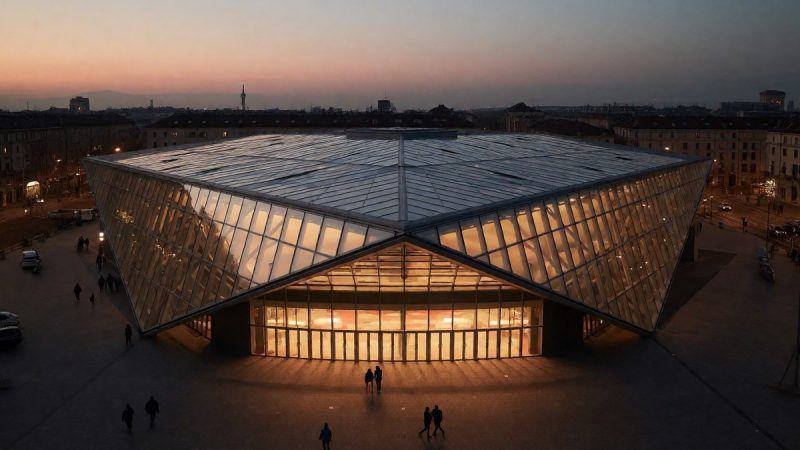
Surface speed ratings provide context for the Turin environment where Sinner would have played. The Inalpi Arena uses hard courts, and the previous year’s Tour Finals rated at 1.42 for surface speed, indicating faster-than-average play. Players hit 25% more aces on such surfaces compared to tour averages. For a player returning from a knee injury, fast surfaces amplify the physical demand on joints. Sinner’s 44-3 record in 2026 included six titles, but the North American hard-court swing was disrupted by the same knee problem that ended his season. His withdrawal from the US Open highlighted how the injury persisted through multiple tournaments. Analyzing his preparation now means looking at his training regimen rather than match statistics, which are nonexistent for this specific event.