Guimaraes and the Brazil national team tactical rotation explained
Brazil secured a spot in the 2026 Volleyball Nations League Finals following a 3-1 victory over Poland. Gabriela Guimaraes manages complex court movements as an outside hitter within various offensive systems like the 5-1 and 6-2 rotations.
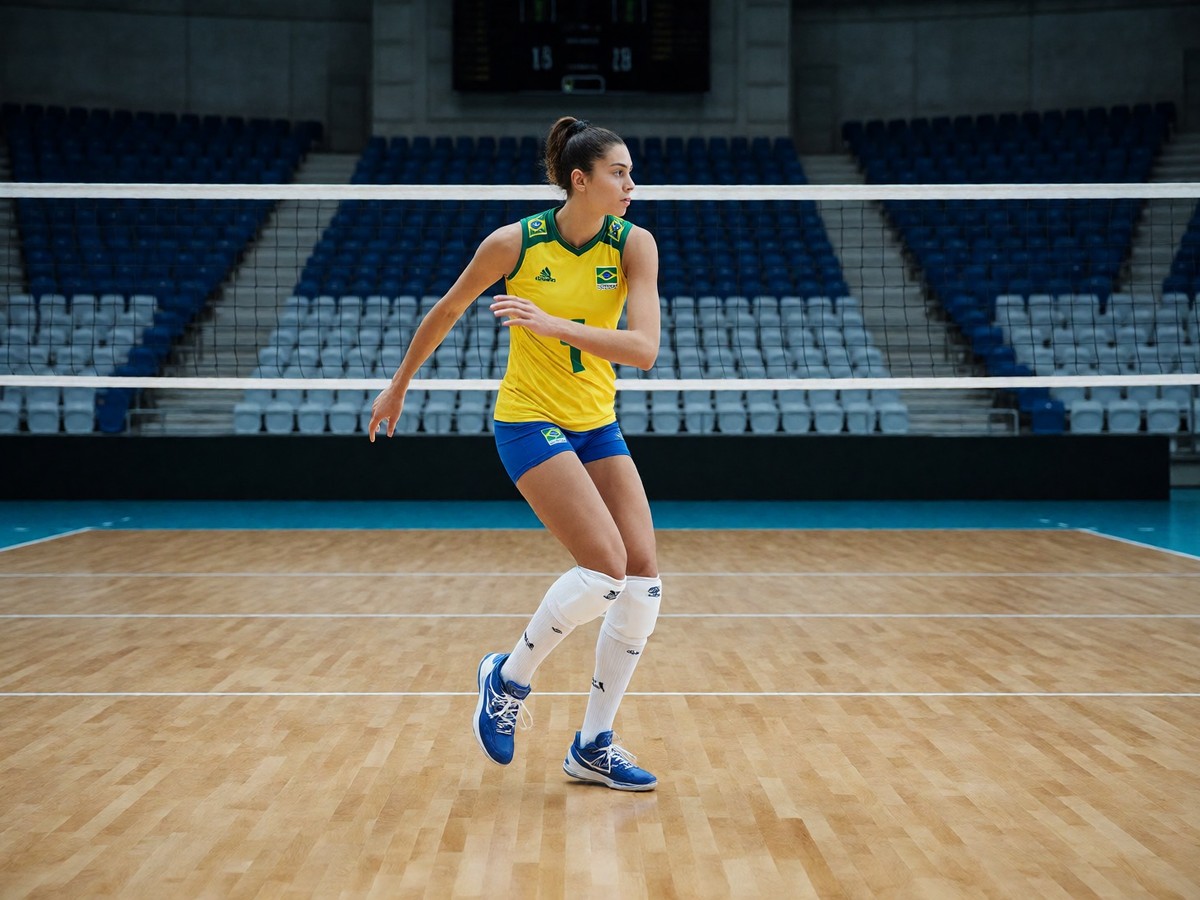
Brazil secured a spot in the Volleyball Nations League 2026 Finals after a 3-1 victory over Poland. Gabriela Guimaraes plays as an outside hitter, which requires movement through different court zones. In a standard rotation, players move one position clockwise every time the team wins a side-out. This movement ensures every athlete cycles through all six court positions, including the serving role. The starting lineup determines the rotation order throughout the set. Brazil’s recent performance in the Volleyball Nations League shows their ability to manage these complex rotations under pressure. The team currently maintains high standings after their victory in Osaka.
How an outside hitter moves
The outside hitter position functions differently depending on the offensive system. In a 5-1 system, one setter runs the offense from all six rotational positions. An outside hitter like Guimaraes stays in a specific rotation order, but she moves to her tactical position once the serve occurs. This specific system, where one setter runs the offense from all six rotations, means the team has three front-row attackers when the setter is in the back row and only two when the setter is in the front row during the play.
| System | Setters | Front-row hitters | Best for |
|---|---|---|---|
| 4-2 | 2 | 2 | Beginners |
| 6-2 | 2 | 3 | Teams with two capable setters |
| 5-1 | 1 | 3 or 2 | Teams with one best setter |
You should notice how the setter’s position changes the number of available attackers. When the setter is in the back row, the front row contains three hitters, but when the setter moves to the front row, the team only has two front-row attackers. Because Ana Cristina Souza started at the opposite position before switching back to her original outside hitter role during the match against Poland, she demonstrated this versatility. In a traditional 5-1 offense, the setter’s base position in rotation 1 is left back. The H1 position is the outside hitter closest to the setter, and this player often has more hitting opportunities than any other player on the team. The M2 is the middle blocker two spots away from the setter, while the opposite is the right side attacker lined up directly opposite the setter. The H2 is the outside hitter two spots away from the setter, and the M1 is the middle blocker one spot away. M1 is usually the better offensive middle attacker because she has more opportunities to hit slides.
The libero plays by replacing the back-row middle blocker. The libero follows that player’s spot in the rotation order without ever rotating into the front row. When the replaced player’s turn reaches the front row, the original player returns.
Avoiding illegal overlap calls
Referees watch for overlap faults, where players stand in the wrong spot before the serve. This occurs if a player breaks the side-to-side or front-to-back relationship with teammates. The middle front player must stay in front of the middle back player and between the left and right front players to form a T-shape. The left-back player must stay behind the left front player and to the left of the middle back player to form an L-shape. According to the NCAA rulebook, each front-row player must have at least part of one foot closer to the center line than the corresponding back-row player.
If a player violates these rules, the referee awards a point to the opposition. This mistake happens when a player moves too early or breaks the left-to-right order before the server contacts the ball. Most players move to their designated tactical home-base positions only after the ball is in play. A middle blocker might move from the left front position to the middle front after the serve. A back-row player, excluding the libero, can attack the ball as long as they take off for their jump from behind the 10-foot line. Does the team struggle more with these positional faults during high-pressure matches?
System differences and player roles
I view the 6-2 system as providing three front-row attackers at all times because the two setters always set from the back row. This provides more attacking depth than the 4-2 system, which uses two setters who set from the front row. Because the 5-1 system relies on a single setter, the team has a more consistent tempo, and the setter is positioned opposite the opposite hitter. I find the 4-2 system the simplest for players to learn because the setter stays in the front row. This system limits the team to two front-row attackers, which creates a disadvantage against strong blocks. In a 5-1 system, the number of front-row attackers changes depending on where the setter rotates, but the setter remains in the left back position during rotation one.