Imoco Volley Conegliano sponsorship and financial realities
Imoco Volley Conegliano manages its 800,000 euro loss through a network of 300 local companies and major jersey sponsors like Jekko and Hausbrandt. The club maintains high-level operations through diverse commercial agreements and significant fan attendance at Palaverde.
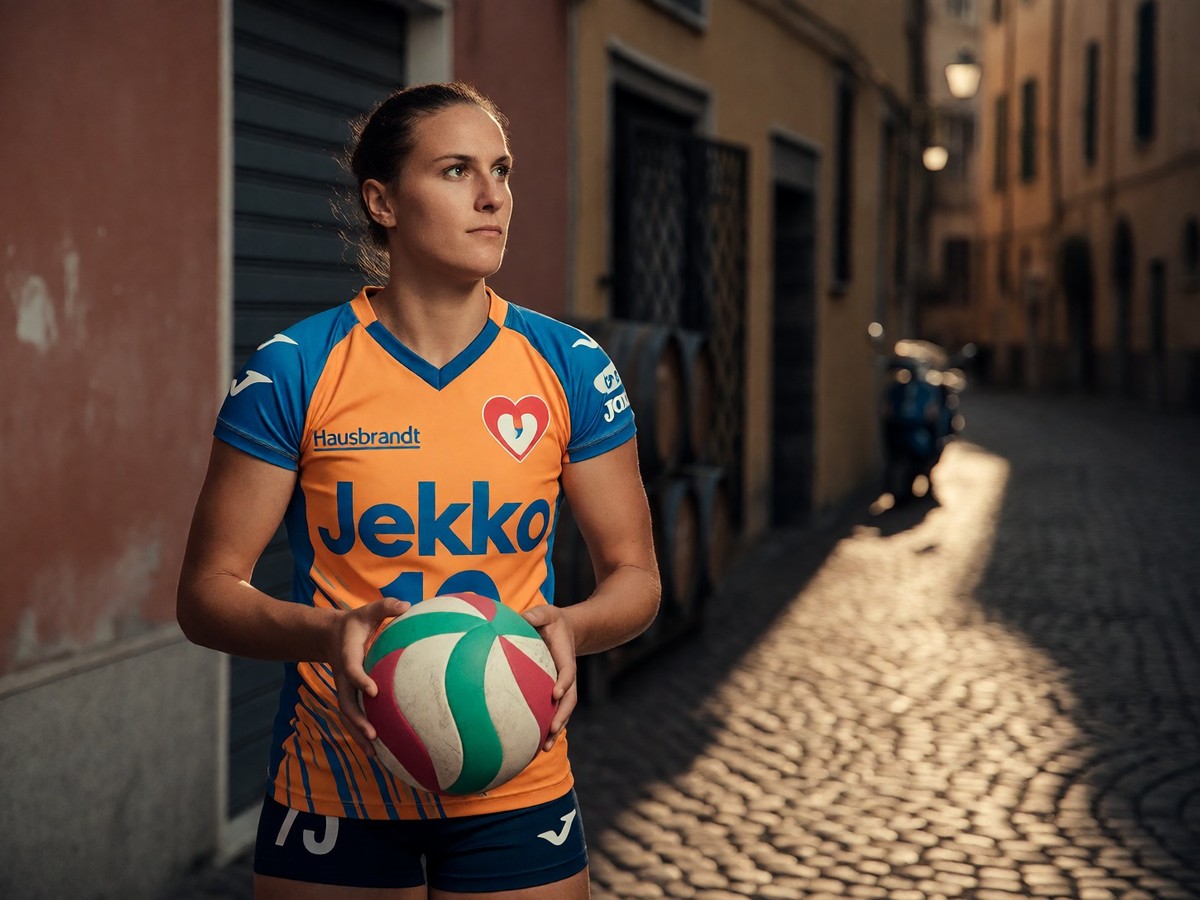
Jekko and Hausbrandt jersey deals
Jekko joined the official sponsors for the 2026/2027 season. The Jekko logo appears on the official playing kit. Hausbrandt holds a three-year partnership with the club. The Hausbrandt logo sits on the side of the heart on the match jersey. Rhoss served as the jersey sponsor during the 2025/26 season. I see the club managing various commercial agreements to balance its books after reporting a loss of 800,000 euro. The club relies on 300 local companies to build its economic foundation. Pietro Maschio, the co-President, says the team of sponsors strengthens with companies like Jekko. The club also maintains a technical partnership with Joma, which started in 2019. Joma remains the technical sponsor for the female champions in Italy, Europe, and the world. CEO Diego Tomasella says Jekko wants to support a local organisation that shows the North-East of Italy on international stages. Arianna Zanetti, the CEO of Hausbrandt, notes that the partnership connects her family history in volleyball to the club. Her father Martino, as well as her relatives Nonna Beppa and Gina Roma, all played volleyball.
Trophies and territory
The club holds 31 titles in its trophy cabinet. These include 9 Italian Championships, 8 Italian Cups, 8 Italian Super Cups, 3 CEV Champions League titles, and 3 Club World Championships. In 2026, the team claimed its ninth Italian title and eighth consecutive league championship. The club also won the 2025-2026 Scudetto Finals by defeating Igor Gorgonzola Novara 3-1 in a best-of-five series. That specific match in Villorba produced scores of 18-25, 25-20, 28-26, and 25-23. Isabelle Haak and Gabriela Guimaraes each scored 20 points in that victory. Sarah Fahr earned the MVP award with 14 points and recorded eight kills and five blocks. Fans visit Palaverde in large numbers, with 110,000 seasonal spectators. Average match attendance exceeds 5,000 fans. The club, which was founded in 2012 by the Garbellotto, Maschio, and Polo families, maintains a massive commercial network involving 300 local companies to sustain its high-level sporting operations and intense competition. The Garbellotto family produces wine barrels, the Maschio family operates distilleries, and the Polo family owns the Imoco graphics company. I find the sheer volume of local sponsorship quite impressive. The club has earned 27 trophies in 13 years of history. The popularity of the sport helps, as StageUp and Ipsos research shows 16.5 million Italians are interested in Superleague volleyball.
Player compensation
Joanna Wolosz joined the team in 2017. She won the Club World Championship in 2019 and the Champions League in 2021. The market for top-tier players shows significant variation. In the German Bundesliga, regular players earn between 2,000 and 3,000 euro monthly. In Romania, the average gross salary for a volleyball player is 64,590 RON or 13,000 euro per year. In the French league, the average monthly salary was approximately 1,500 euro. While some players earn 90,000 euro, elite talents in other leagues reach 250,000 or 300,000 euro per season. In Greece, high-level players receive contracts exceeding 100,000 euro. I find it difficult to pin down the exact bonus structure for Champions League qualification because the specific contract details remain private. You, familiar with the lack of transparency in these deals, understand the difficulty. Do these players receive enough to offset the club’s reported 800,000 euro loss? In some German or French leagues, players might only make 50,000 euro for 8 months. In the German Bundesliga, it is difficult to find players earning more than 200,000 euro in a full season. In Romania, teams generally have budgets of less than one million euro.