The Numbers Behind Wembanyama’s Defensive Impact
Victor Wembanyama leads the NBA in shot avoidance, saving 10.43 points per game and forcing opponents to take 6 percent fewer rim shots. His defensive rating of 110.4 and 3.1 blocks per game confirm his status as the league's premier rim protector.
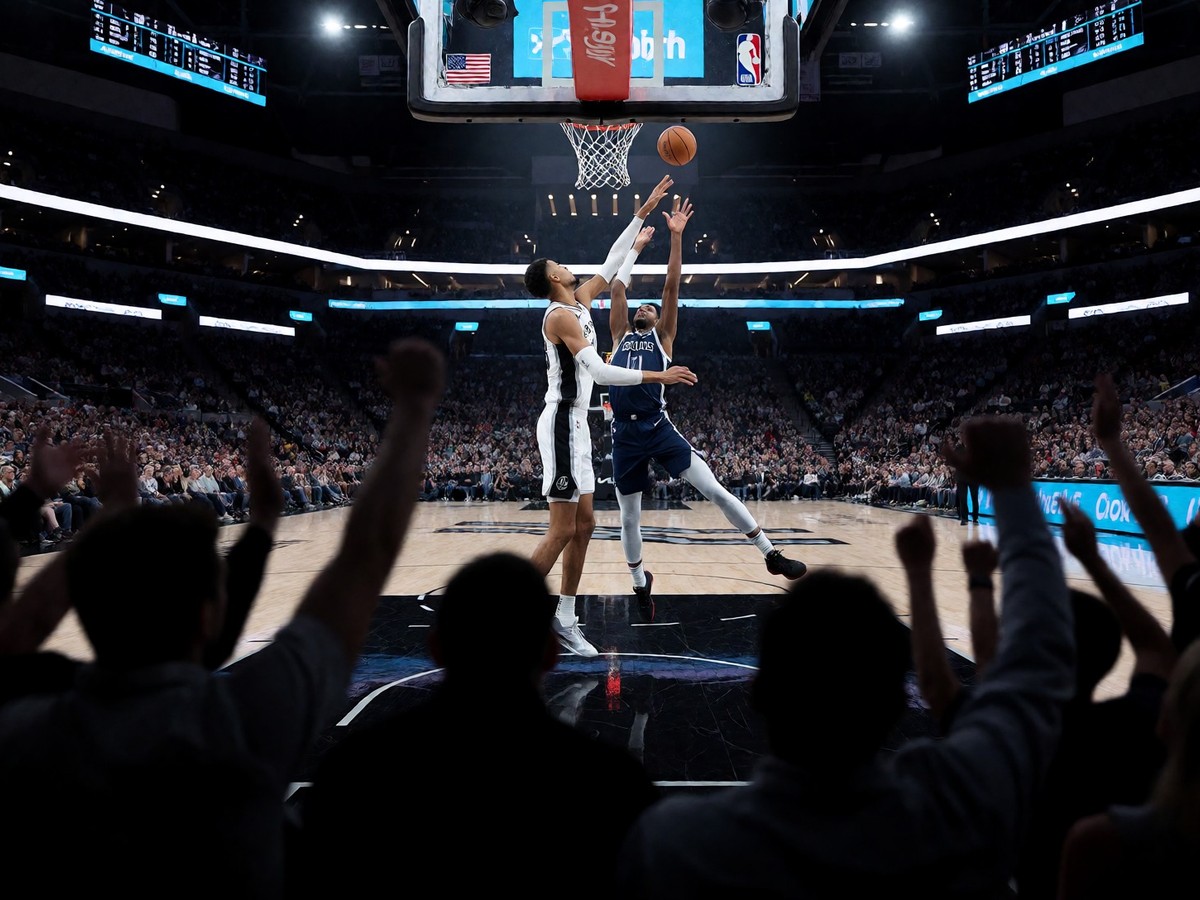
Victor Wembanyama’s defensive impact is defined by shot avoidance rather than raw block totals. He led the league in blocks for a third straight season, averaging 3.1 per game, and became the first unanimous Defensive Player of the Year at age 22. His Spurs defense ranked third in the NBA with a rating of 110.4 while limiting opponents to 45.1% from the field. These figures confirm his status as the league’s premier rim protector, yet the box score only captures half the story. The real damage occurs before the ball leaves a shooter’s hand.
Route Cancellation and Shot Quality
Tracking data reveals that opponents take 6 percent fewer shots at the rim when Wembanyama plays. That specific metric ranks in the 98th percentile across the entire league. Teams also attempt 3 percent fewer shots from 4 to 14 feet, a figure that sits in the 95th percentile. This pattern indicates that players abandon good looks because the risk of contesting him feels too high. You know this dynamic well if you have watched film of guards hesitating at the restricted area. The "Wemby flinch" describes this hesitation, where a driver retreats from a layup to a corner three.
Opponents shoot 11 percent worse on long twos and 6 percent worse on short twos against him. His influence extends beyond the paint into the midrange, forcing rushed floaters and contested pull-ups. In San Antonio’s 104-102 loss to Minnesota, he recorded an NBA playoff record 12 blocks alongside 15 rebounds. The loud part made history, but the quieter part explained how offenses broke down. He forced the Wolves to turn down looks and finish over a player who could meet the ball after the window closed.
Points Defended and Career Context
A calculated metric for points defended places Wembanyama far ahead of every other defender in the league. He saved 10.43 points per game, significantly outpacing Brook Lopez at 8.83 and Anthony Davis at 8.10. As a rookie, he already saved more points per game than any previous award winner in public records dating back to 2015. His career total of 627 blocks exceeds the next active player by 203. This statistical dominance supports his claim as the best defender in the NBA.
The Spurs currently hold an 8-2 record, tying them with Oklahoma City for second in the Western Conference. Wembanyama averages 29.1 points and 12.0 rebounds in the last ten games while maintaining a 3.9 block average. His on-court plus-minus stands at 25.5 per 100 possessions, reflecting the immediate impact of his presence. The team allows 111.5 points per game, which ranks eighth in the league despite his individual brilliance.
Can teams adjust their spacing to neutralize his range? Executives suggest they will use five-out alignments and early screens to test his communication. Some of those adjustments will work, as elite guards still find ways to score. No single defender solves every offensive problem, even one with such extreme dimensions. The question remains whether the league can develop a consistent counter to a player who guards the next idea rather than just the man.